When rooms, spaces and services run on one connected system, individual bookings, group stays and events follow the same up-to-date information. Clock brings reservations, room blocks, event management, guest tools, POS and payments together, so planning and delivery stay consistent without switching systems or repeating work.
The next part shows what this looks like in practice — from first inquiry to checkout, from complex events to individual guests.
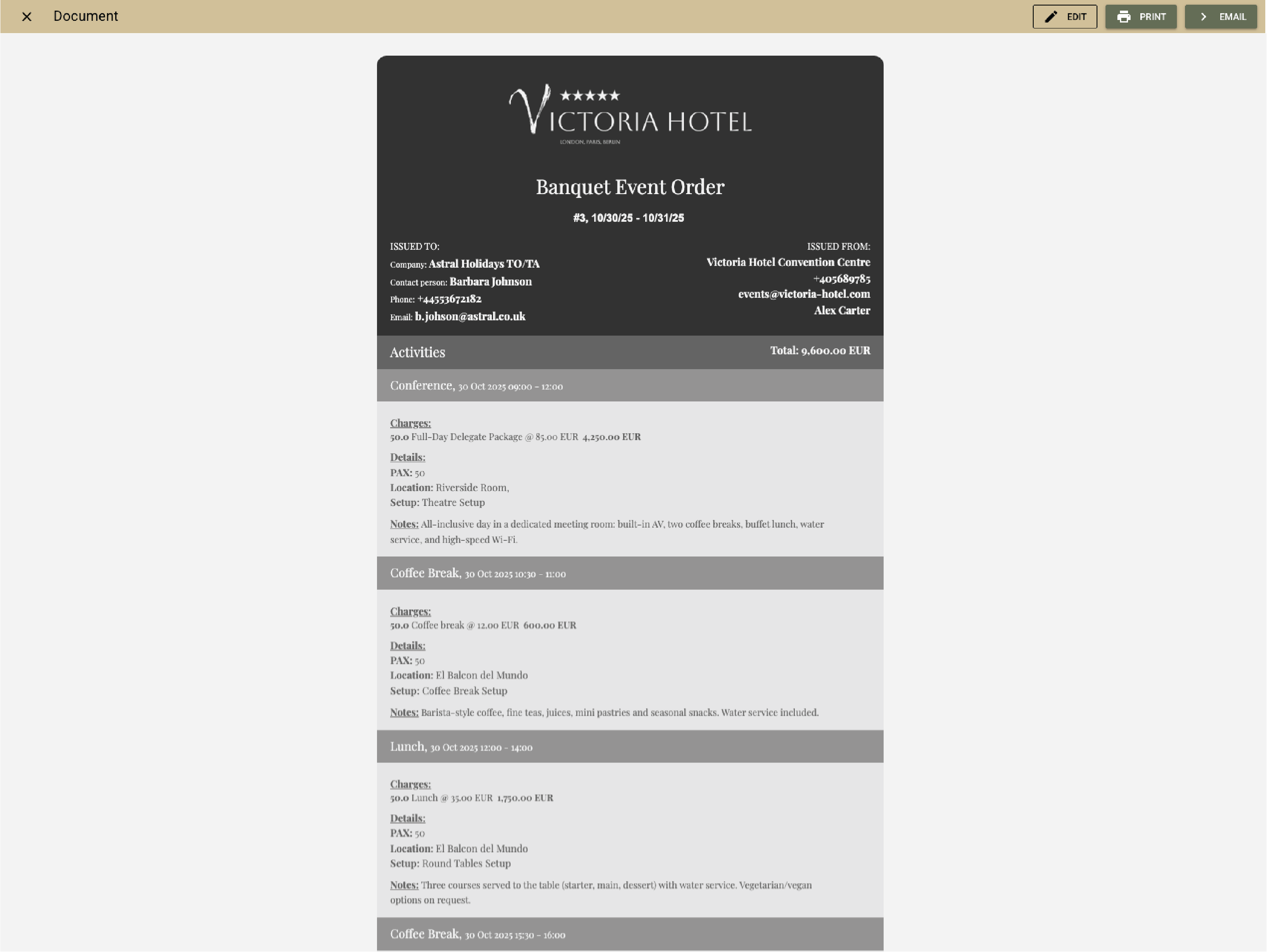
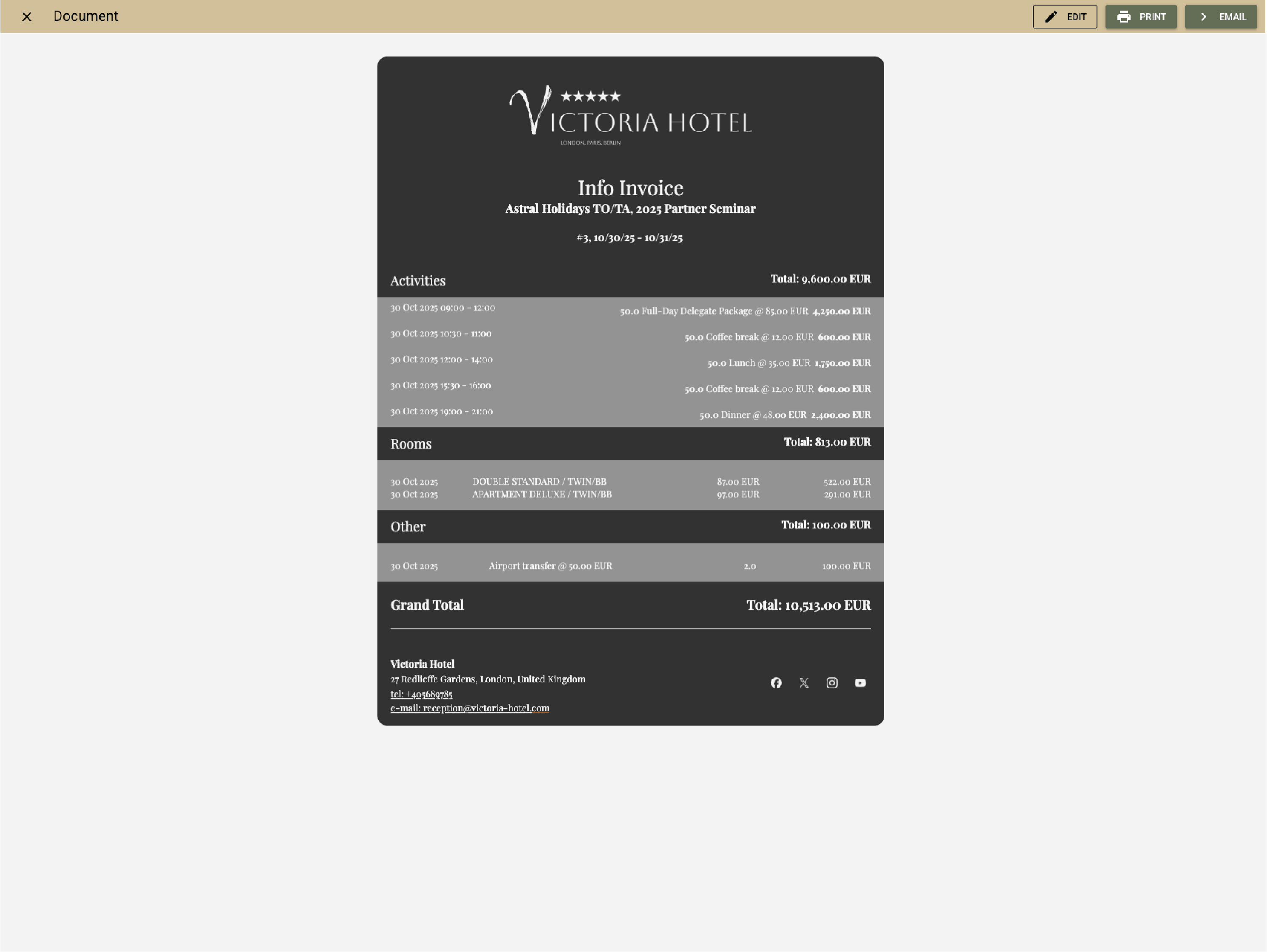
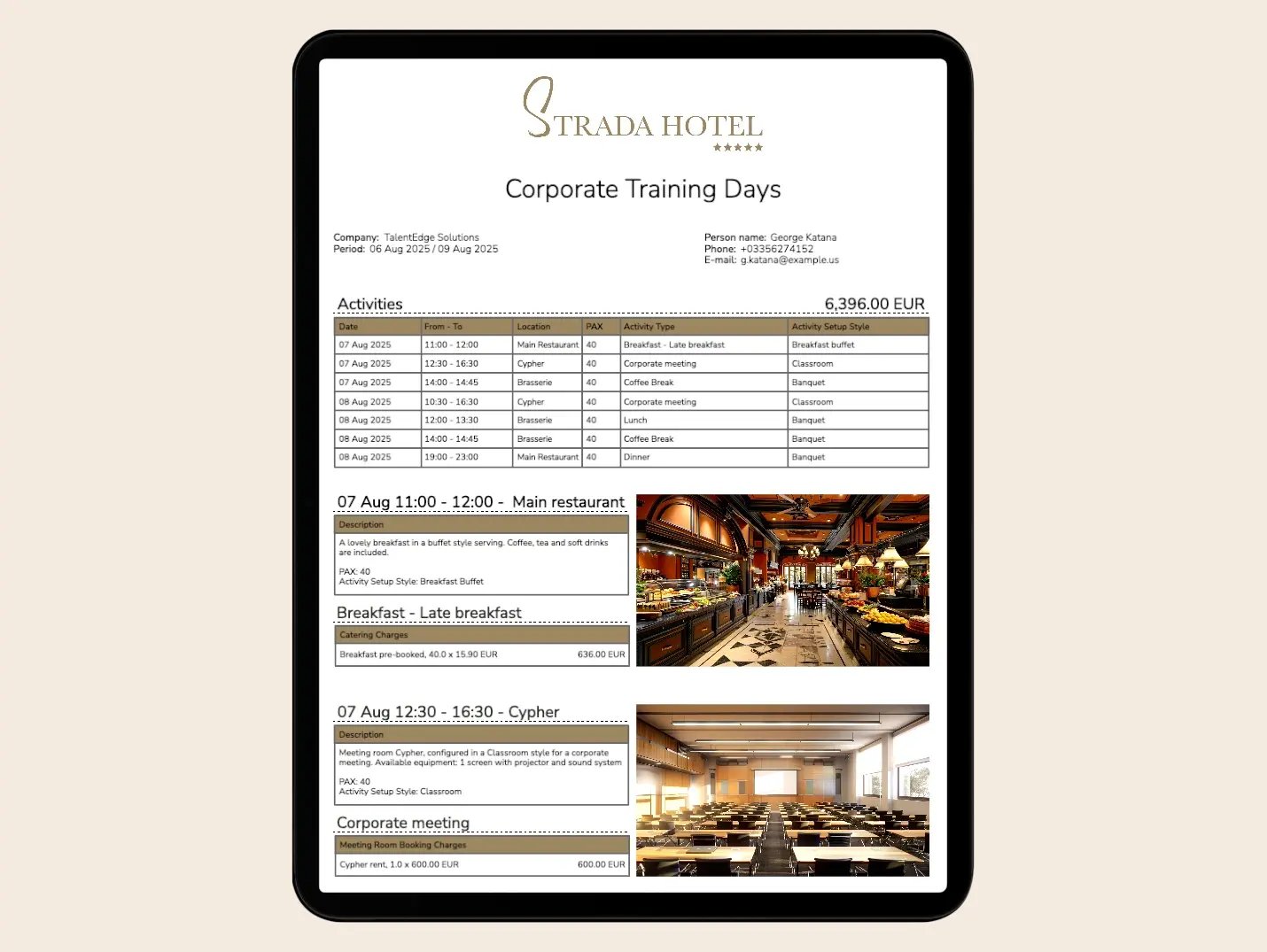
Create and send branded venue overviews, proposals, and Banquet Event Orders (BEOs) in one flow, with easy updates to match client requests.
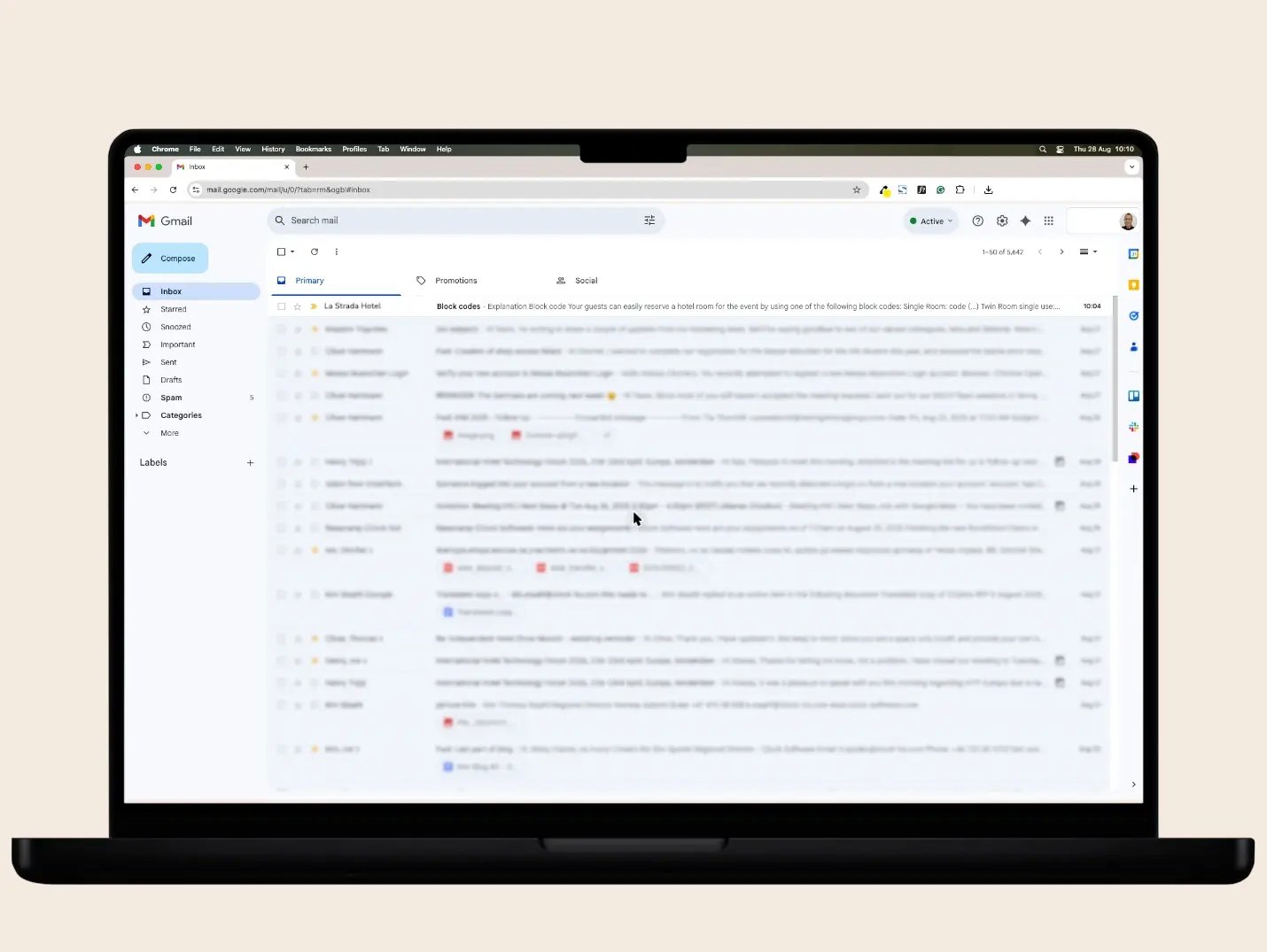
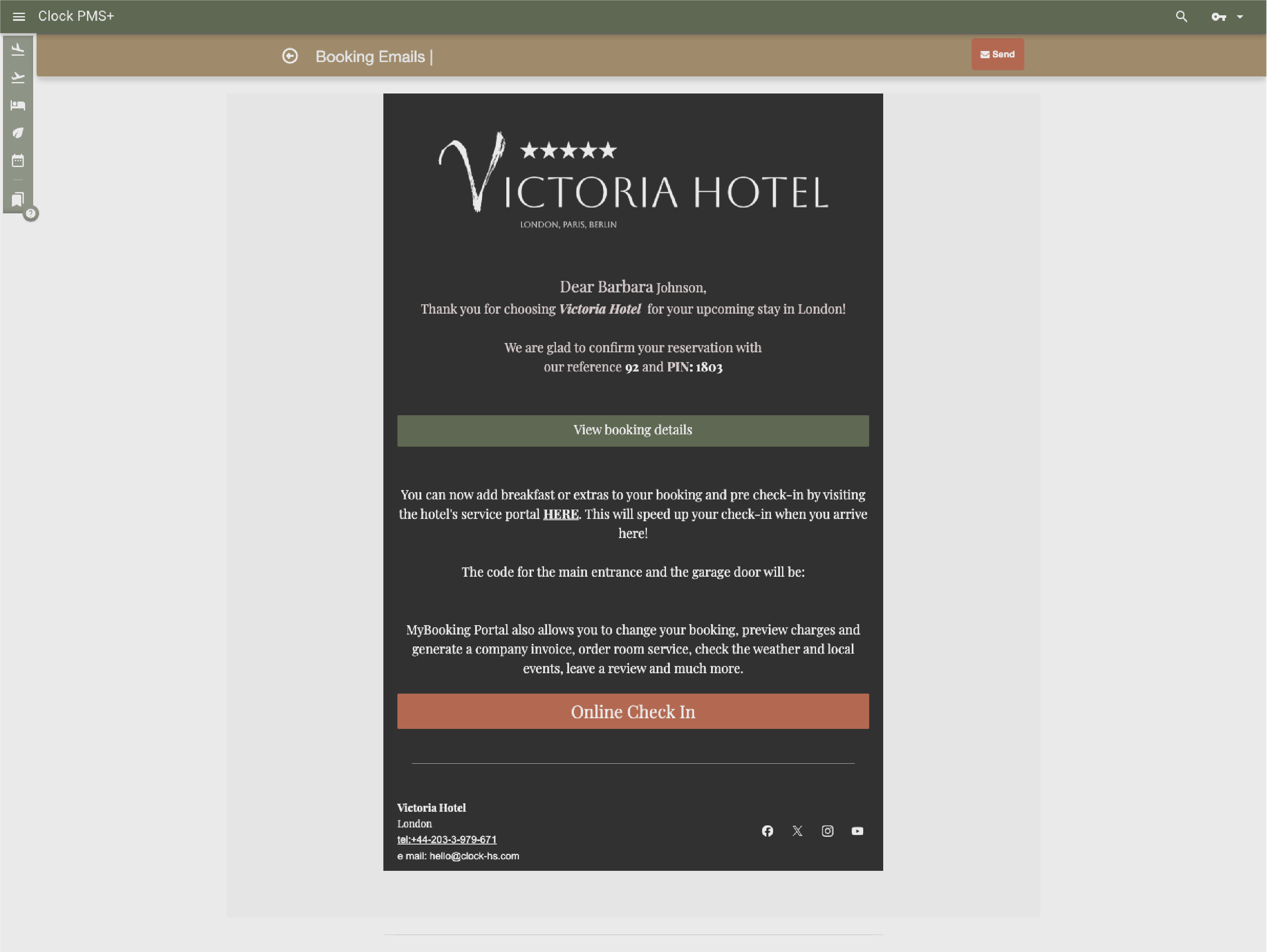
All emails are linked directly to the event — no more digging through inboxes.
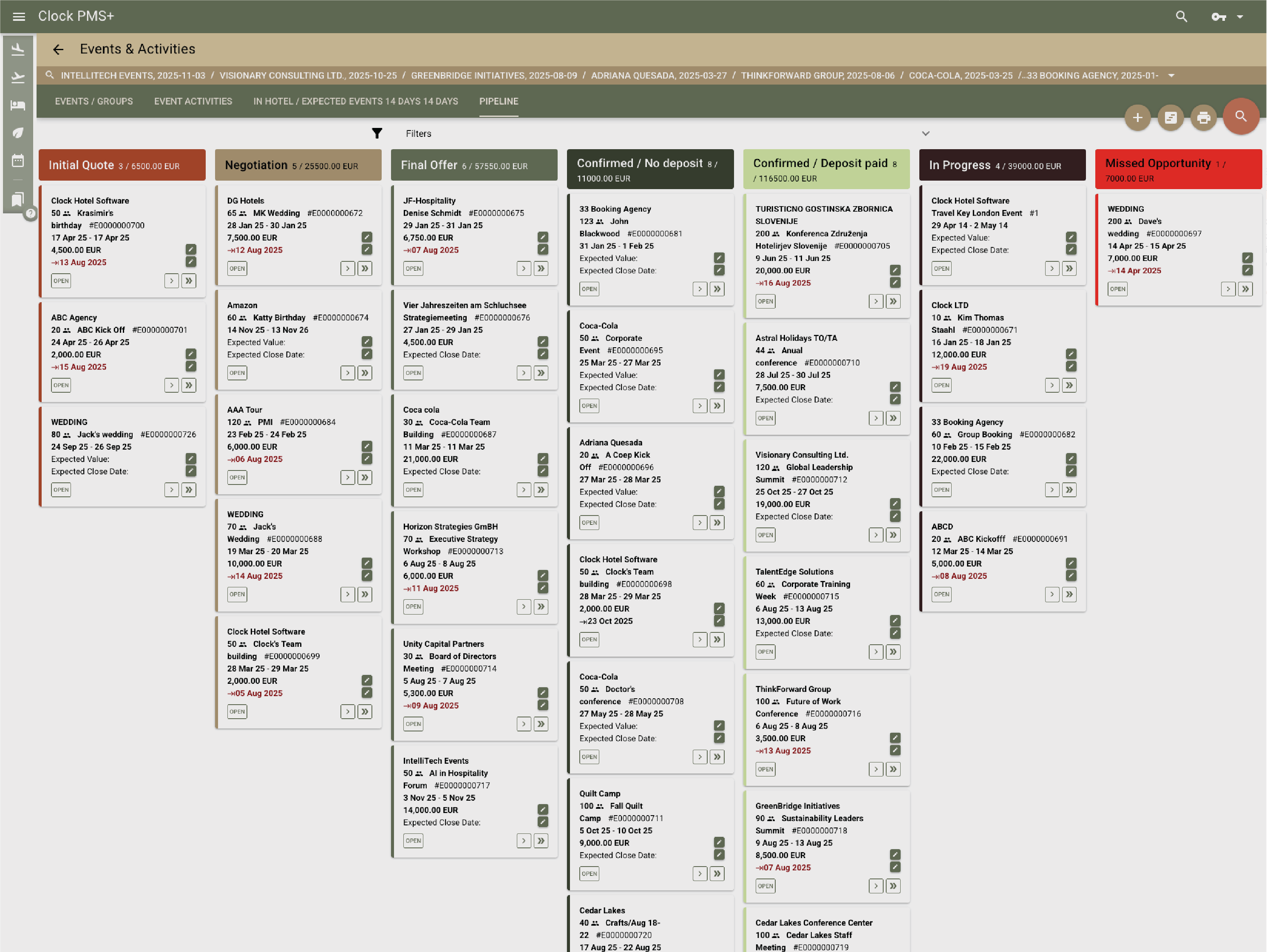
Your pipeline shows every stage, from first request to signed agreement.
Draft agreements from templates in seconds and send them digitally. Clients sign online, pay deposits, and payments post automatically—flipping the event to “Guaranteed.”
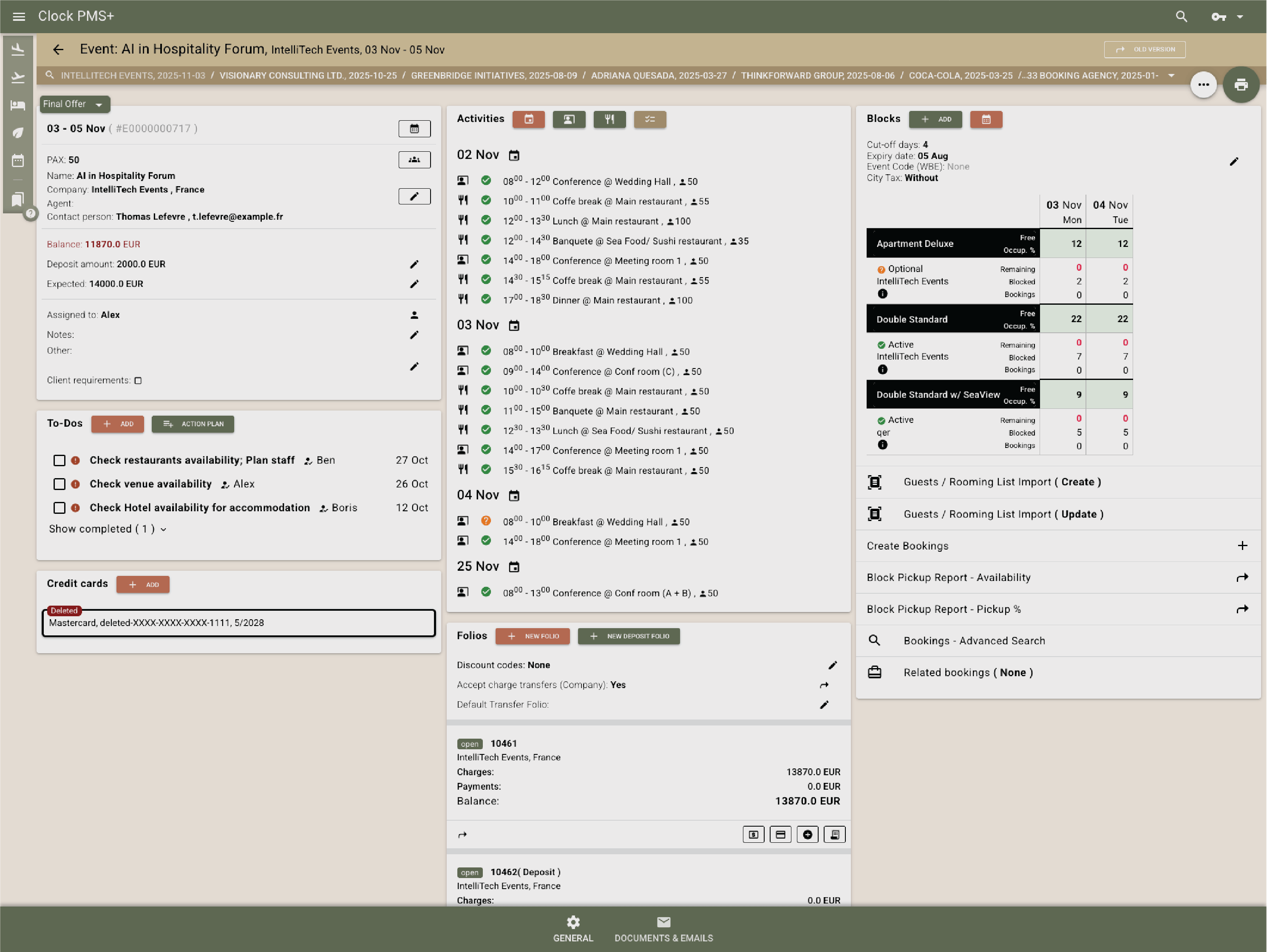
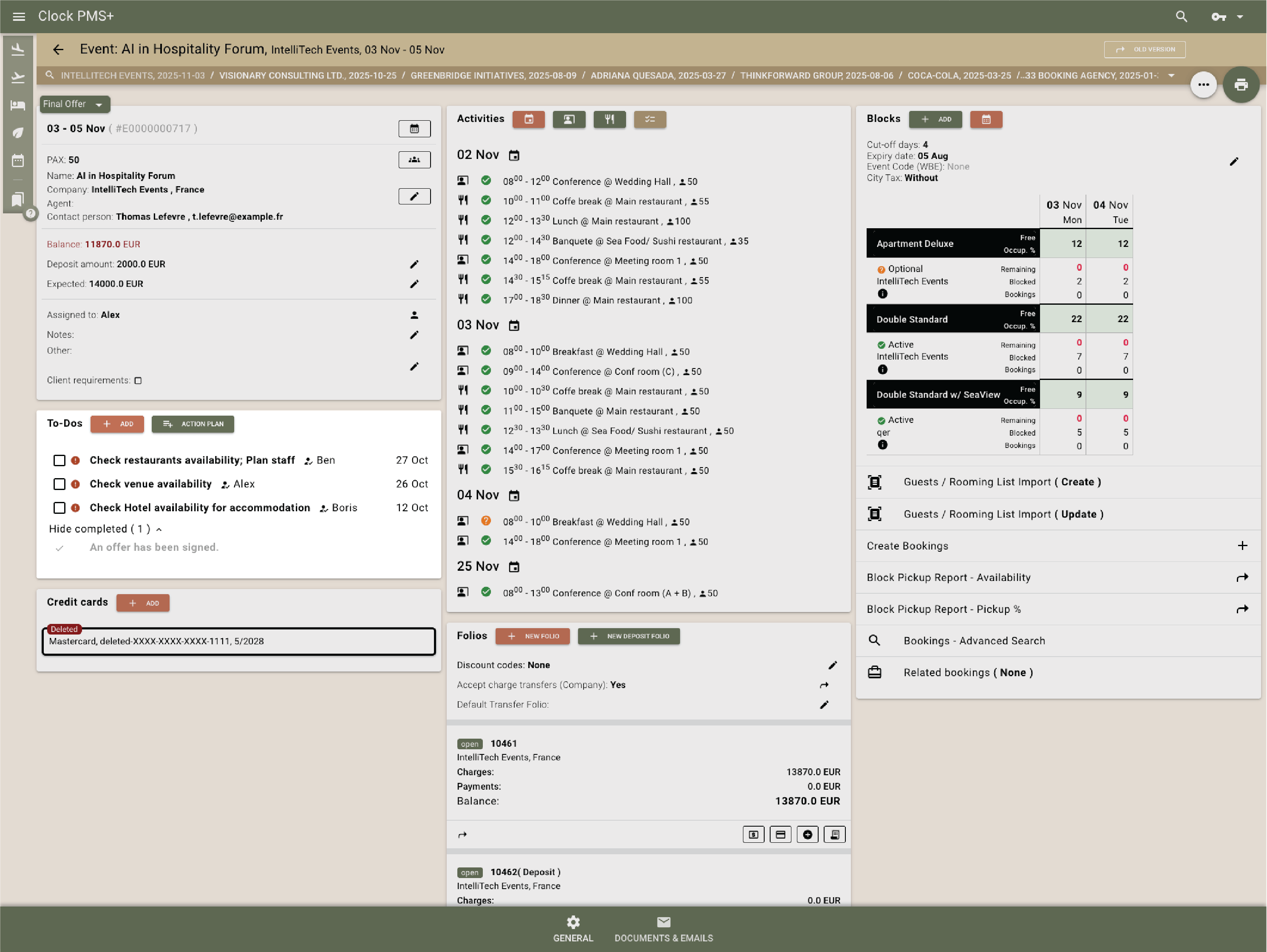
Meeting rooms, restaurants, pickups, blocks, and guest bookings all sync in one place.
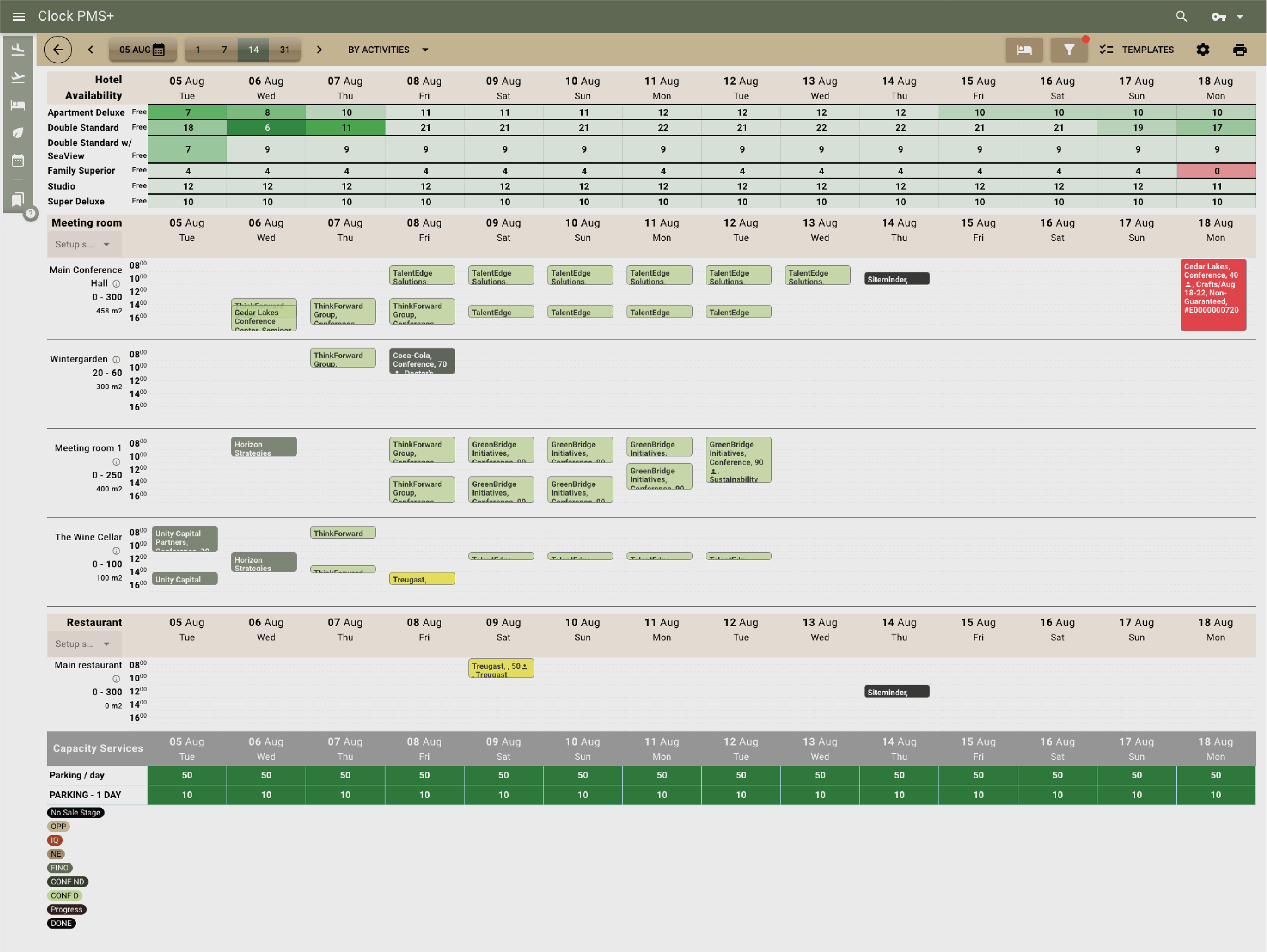
Shared calendars show rooms, meeting spaces, restaurants, spa zones, modular venues, and more.
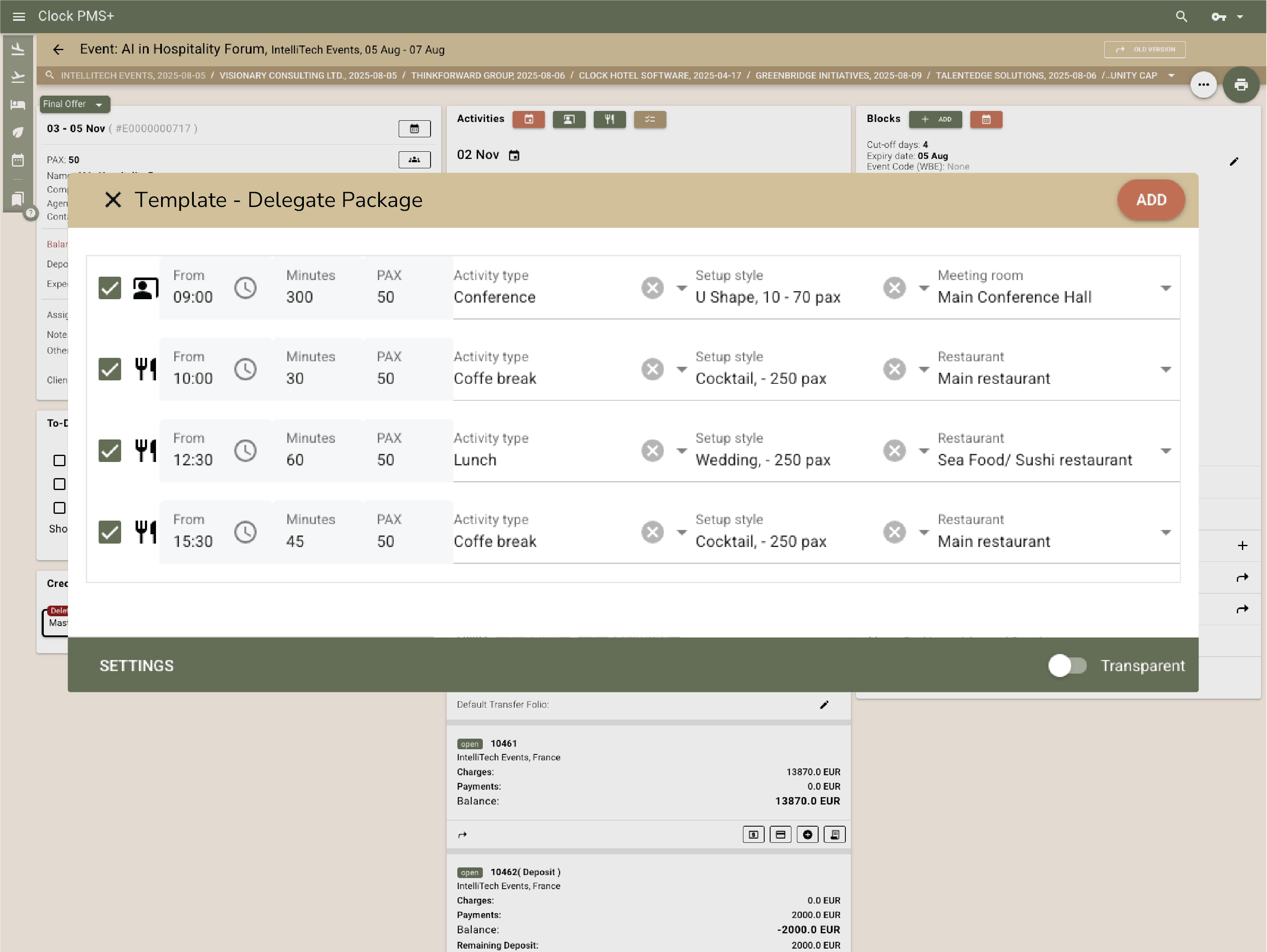
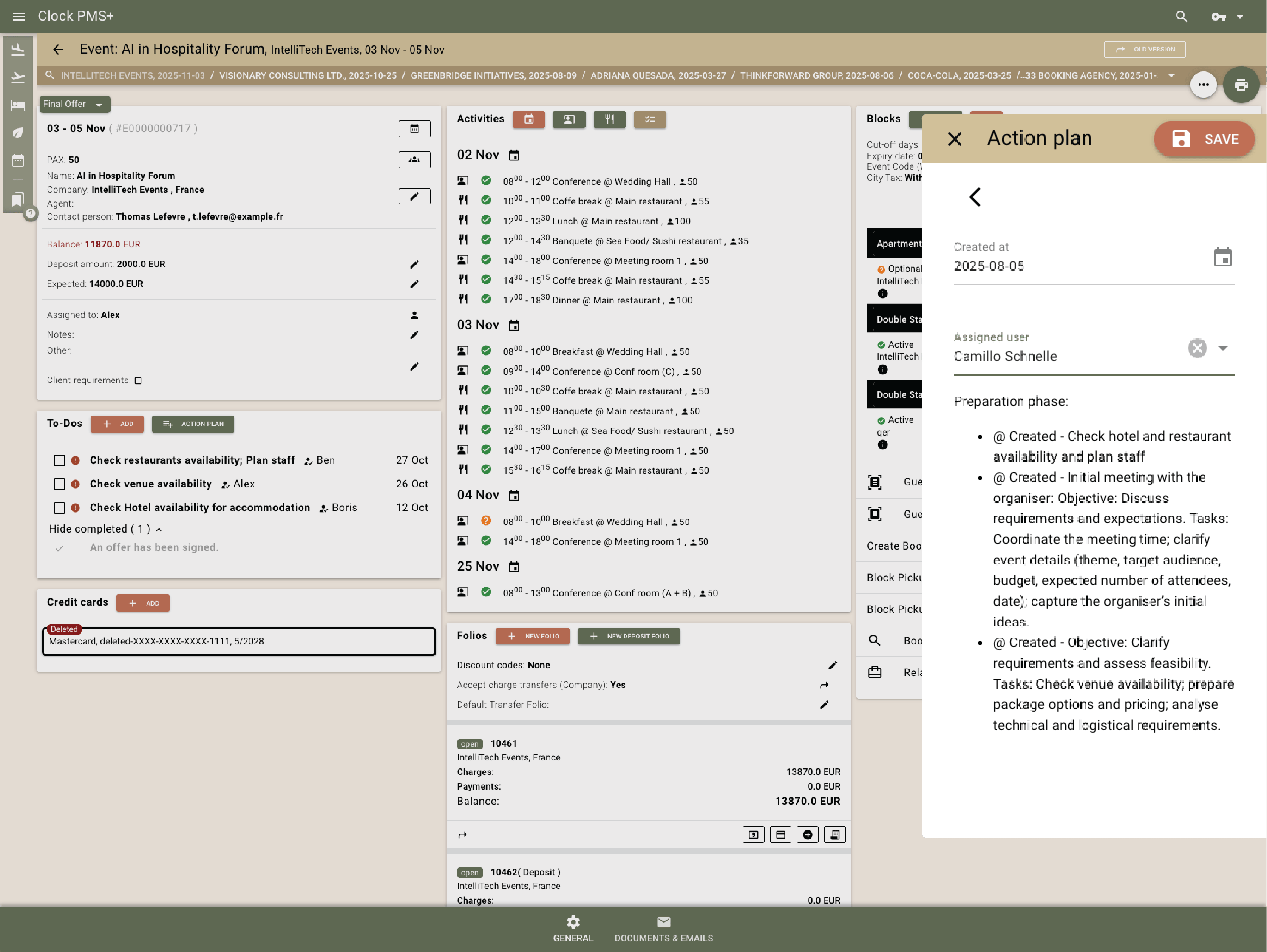
Event templates pick the right space, post charges, and create tasks automatically.
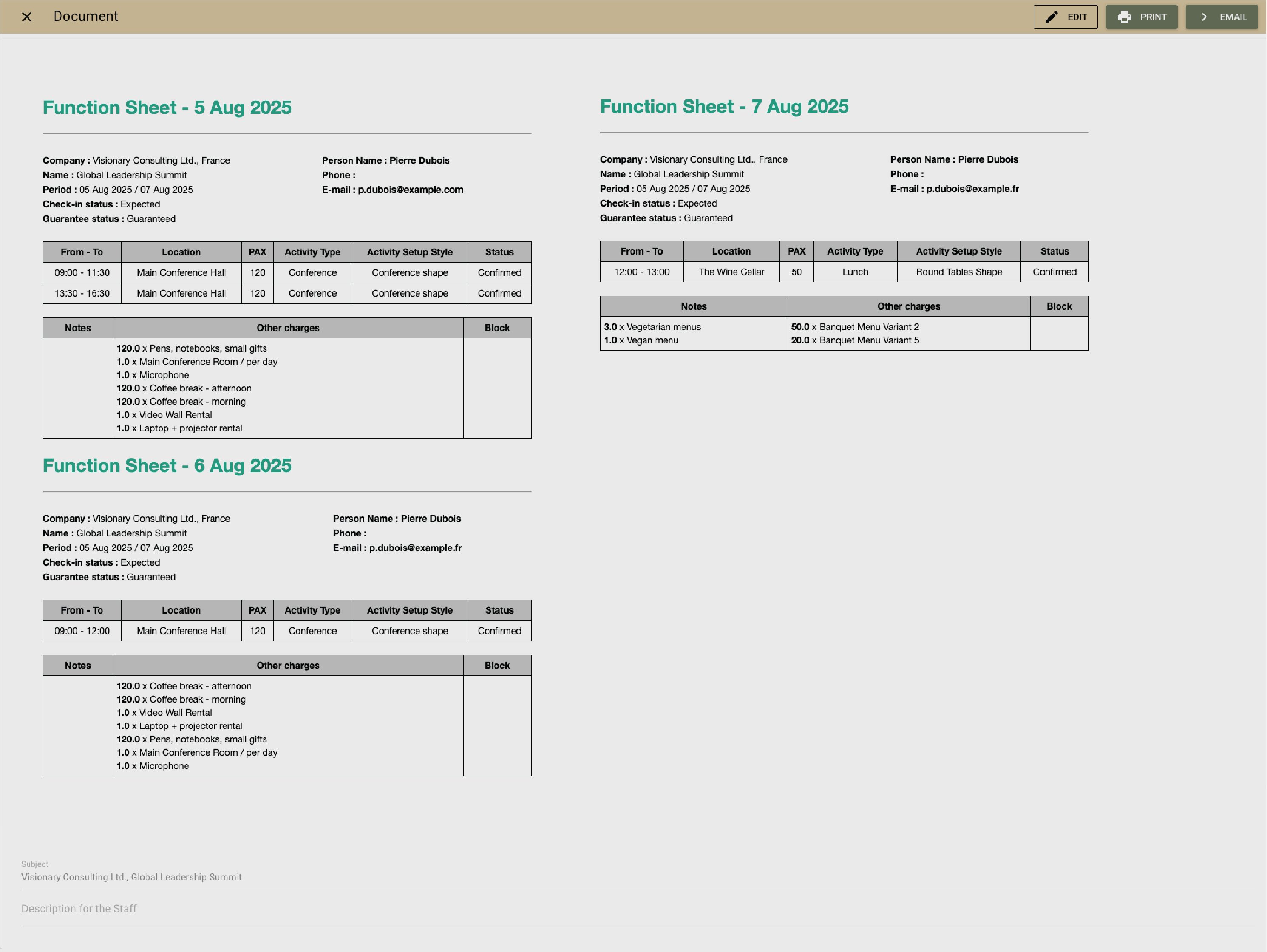
Function sheets, tasks, notes, and to‑do plans update live for every department.
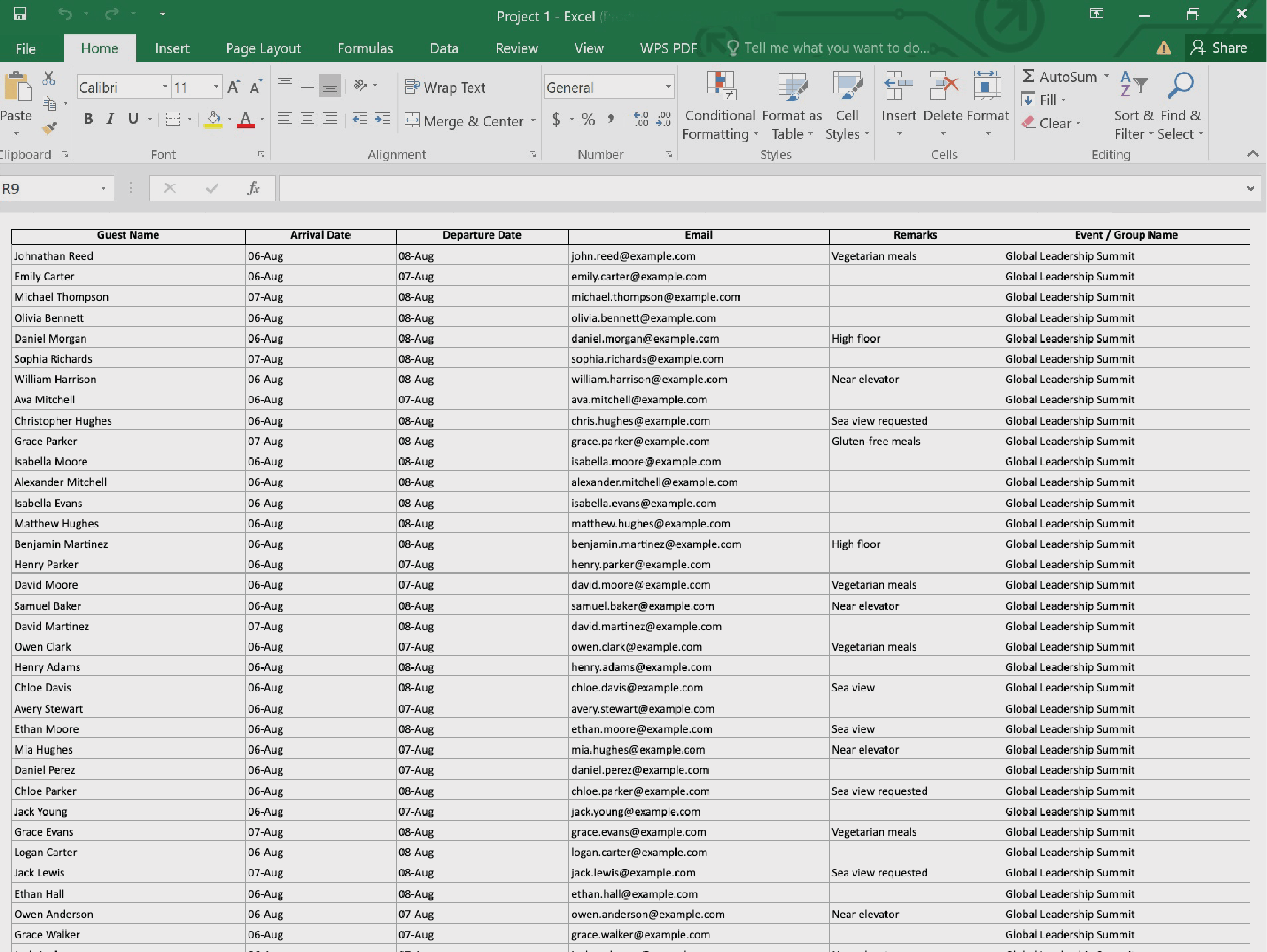
Import in bulk, validate instantly, and sync with blocks. No manual entry, no errors.

POS charges flow straight to the right folios — guest or organiser.
All bookings are managed in one place with automatic OTA sync.
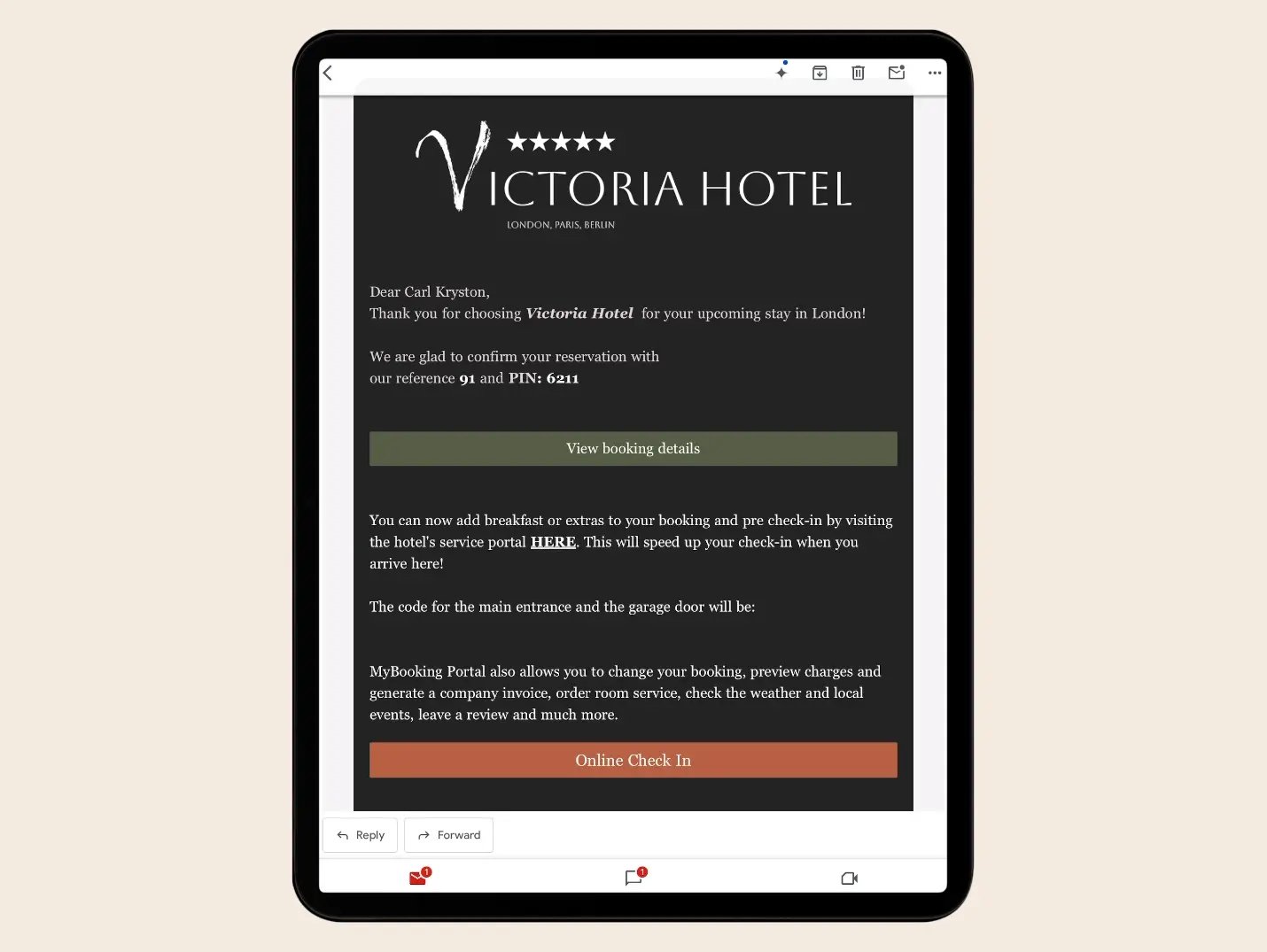
Smart room allocation and smooth check‑ins cut mistakes and speed arrivals. Online check‑in and self‑invoicing reduce paperwork for staff.
Guests book breakfast per day, per guest, or for the room, plus capacity‑limited services like parking, spa, yoga, or transfers — all tracked and billed.
Split or combine invoices with routing rules. Folio splits, transfers, and corrections happen in clicks.
Deposits, OTA cards, cancellations, and event folios run automatically. Terminals can be connected too.
Tasks update instantly. Finished or broken shows at the desk, minibar posts to folios.
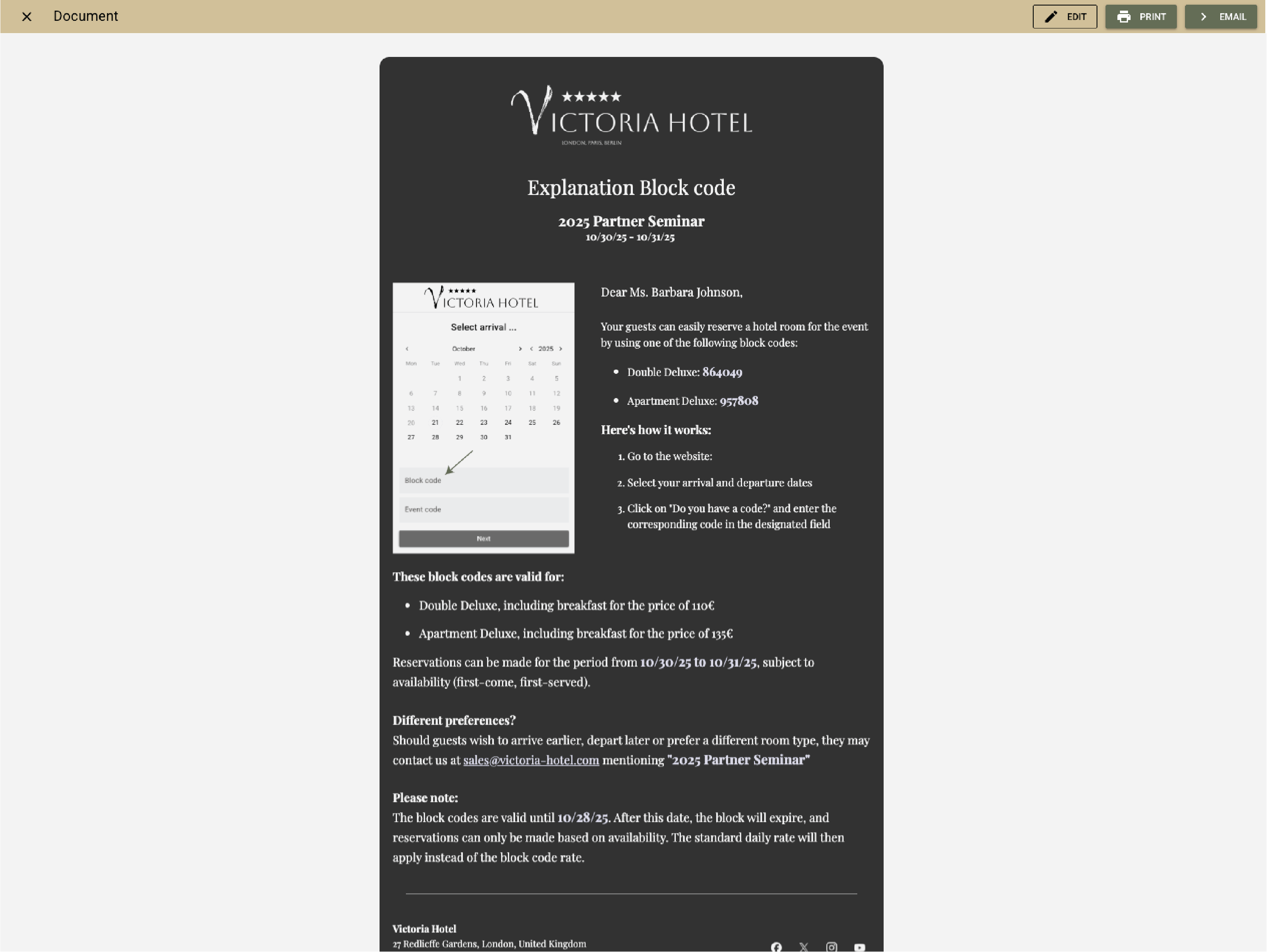
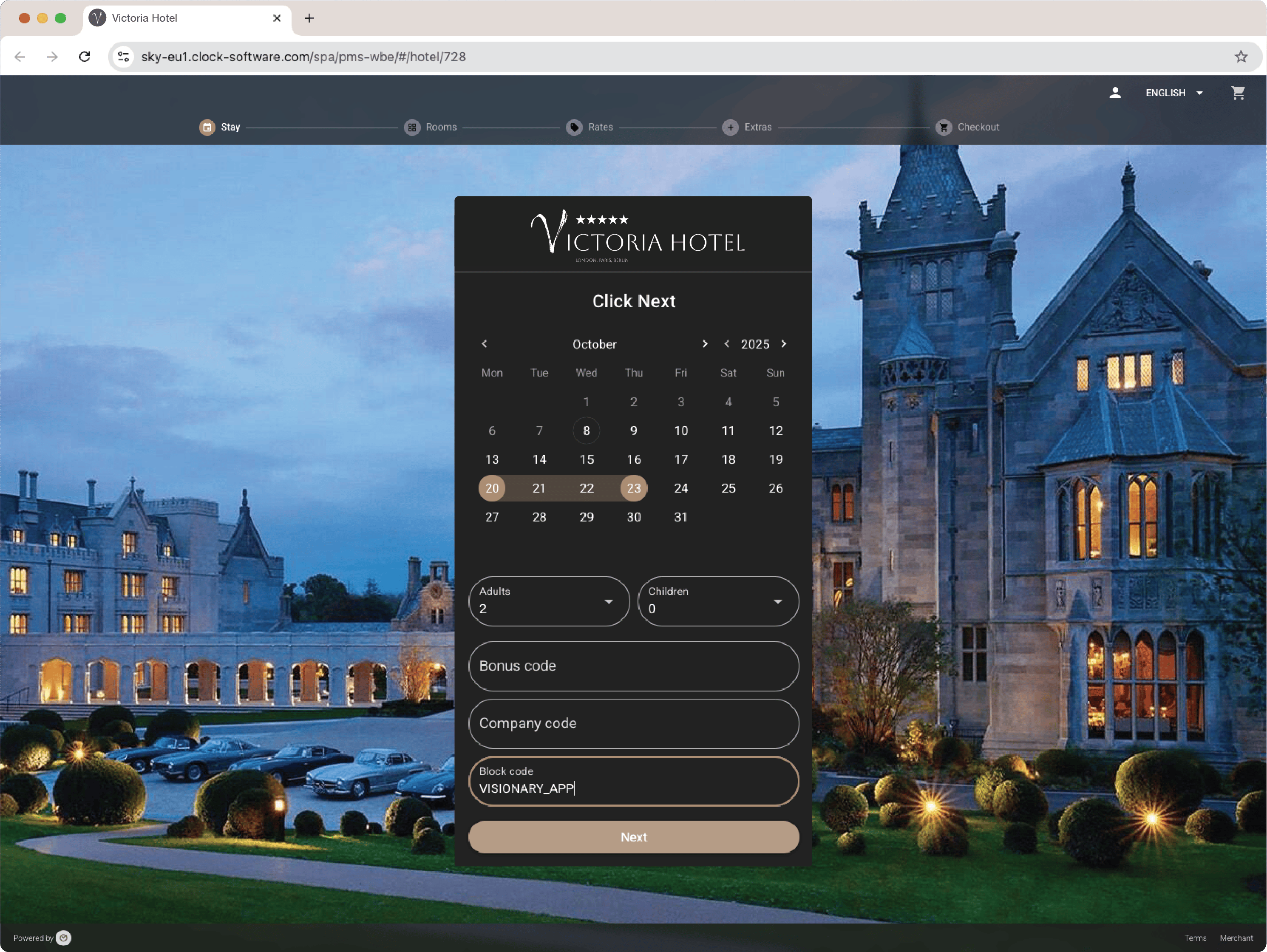
Let guests book rooms, events, and extras through your branded booking engine, hosted on your domain — no third-party redirects or fees.
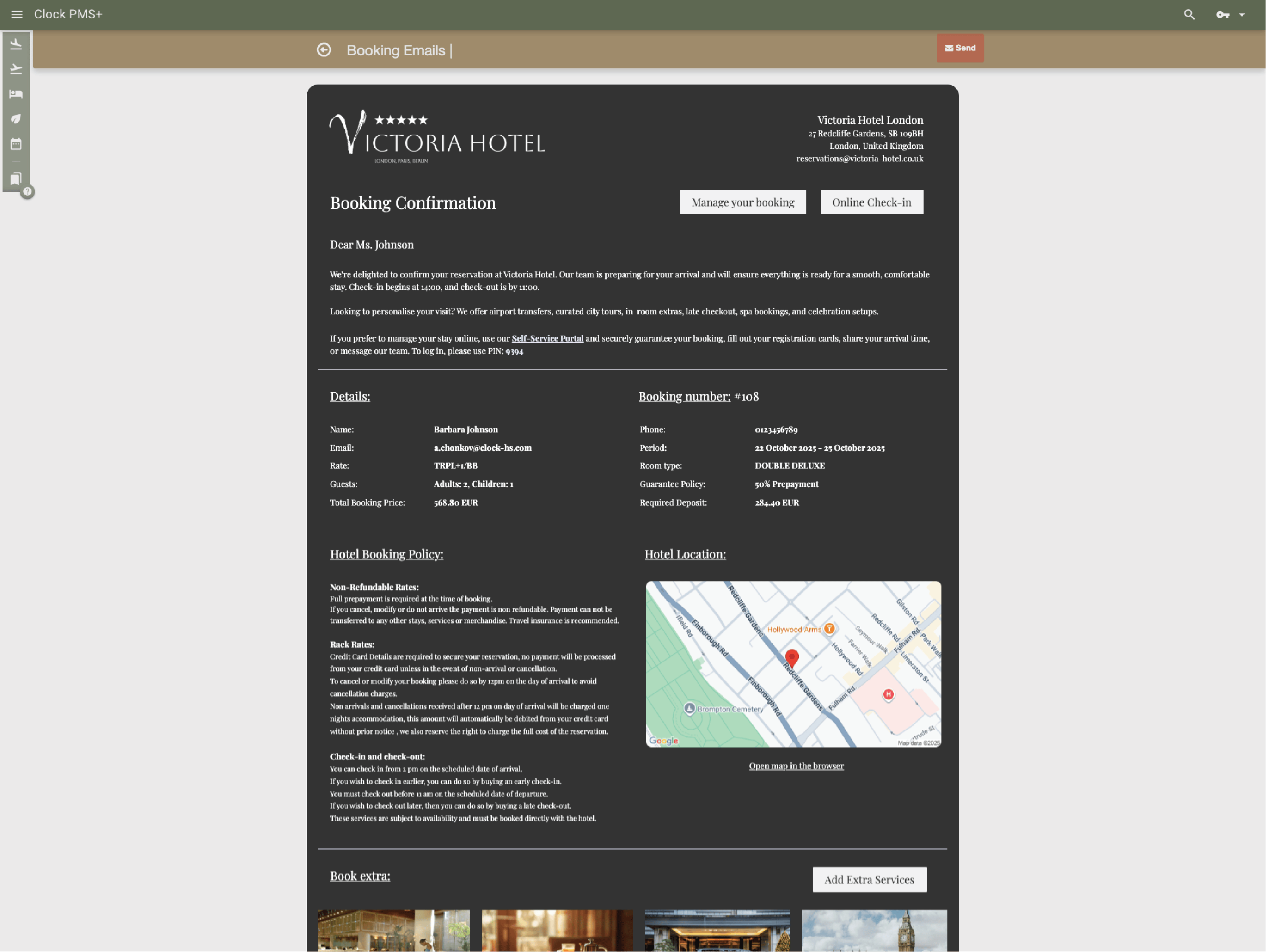
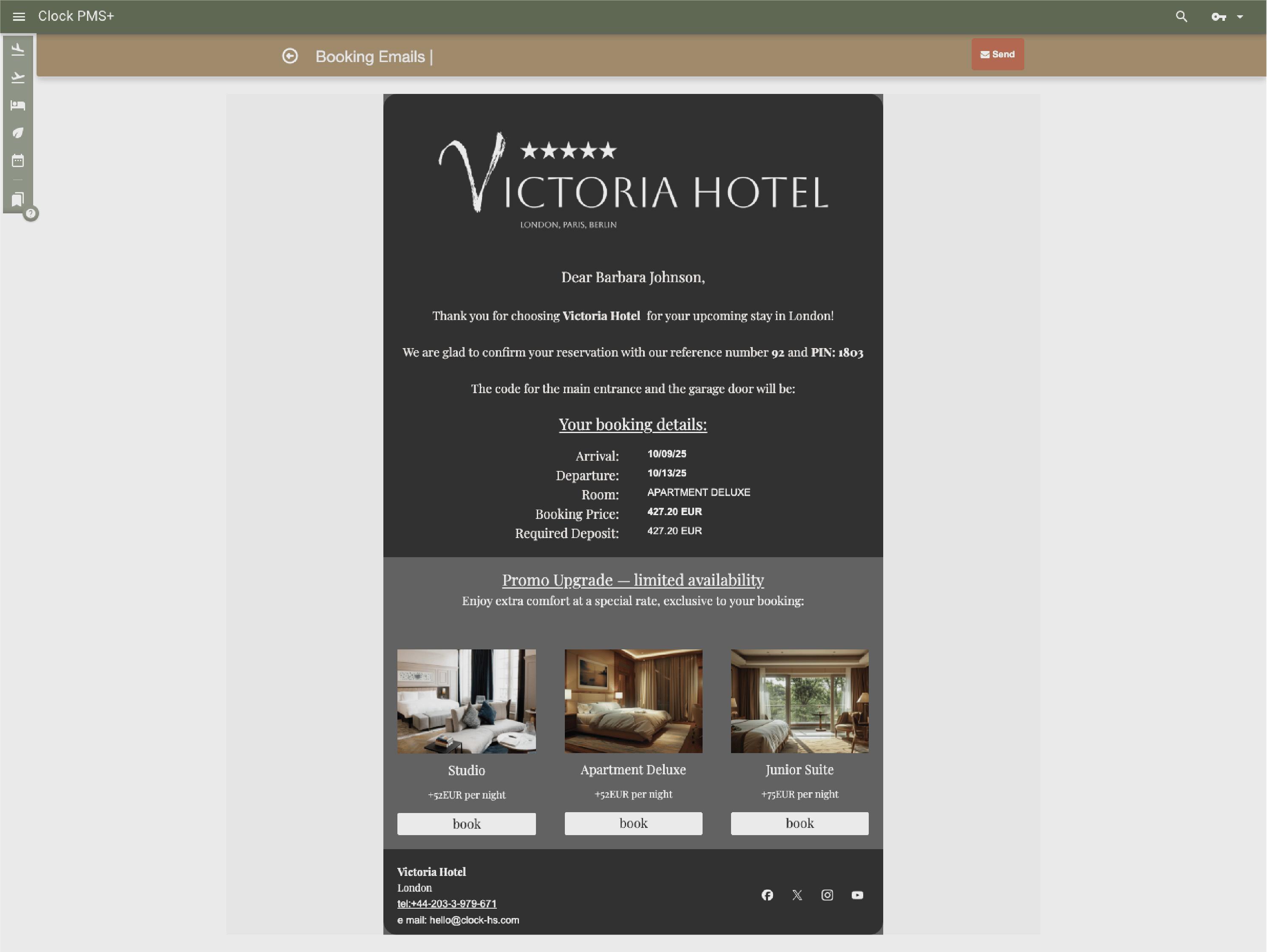
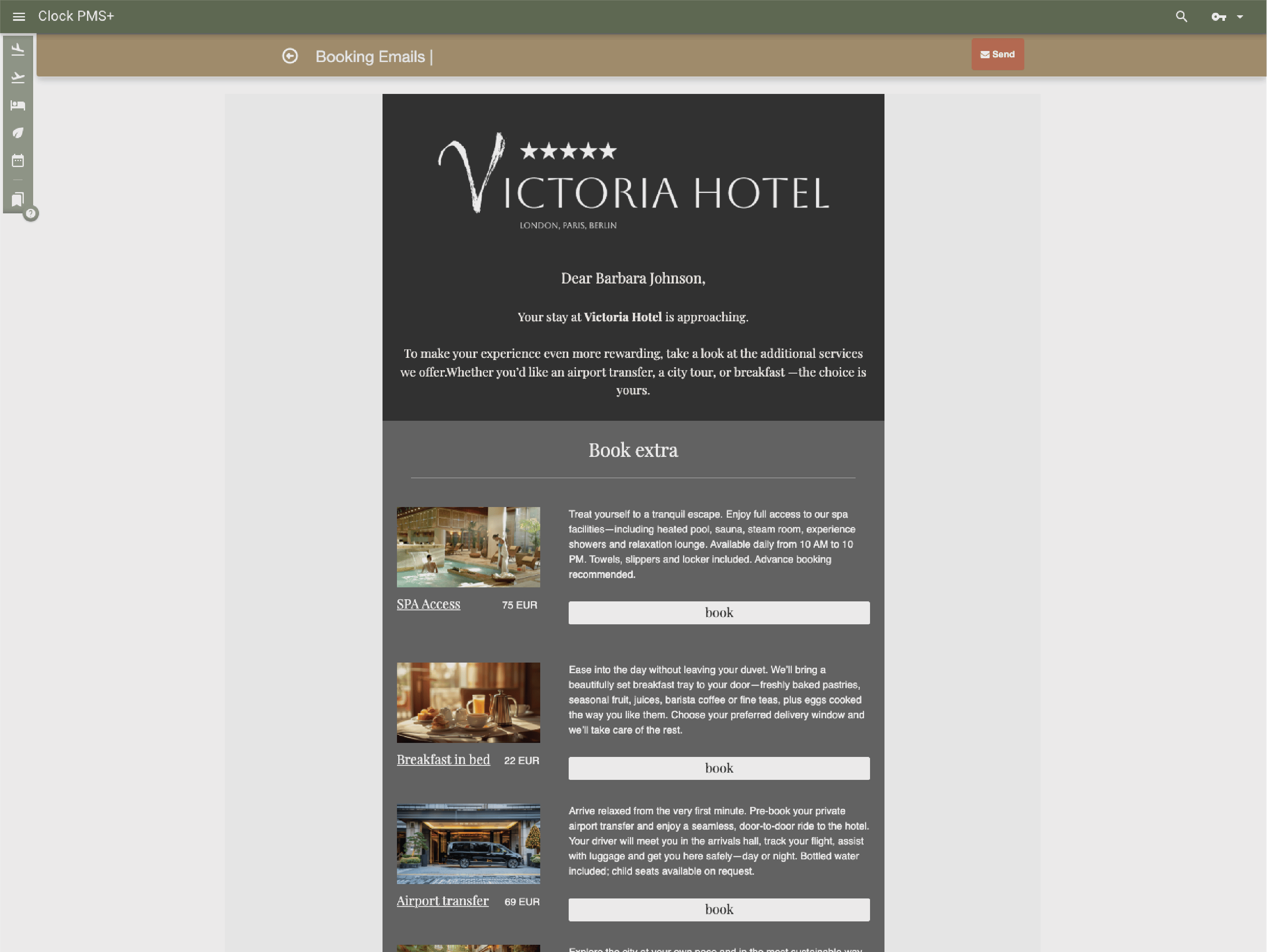
Segmented emails invite guests to check in online, buy an upgrade, reserve extras, or simply receive useful pre‑arrival info.
Guests take control of routine tasks while staff focus on service.
Sell upgrades, extras, and capacity-limited services at every touchpoint — during online check-in or through the guest portal.
Real world gains? We don’t believe they can be fairly measured.
No hype, just software.
We’re founder-owned and customer-funded. No investors chasing growth-at-all-costs, no bloated teams, no flashy marketing spend. That’s why we can keep pricing fair and simple — one uniform, all-inclusive fee with every tool event hotels actually need, from PMS and events to POS and guest apps, included.
Since 1996. This is our second-generation PMS, built on decades of hotel tech experience. We added event management in 2016 and have released continuous updates, with the second generation going live in 2024.
Independent hotels, resorts, groups, and especially event-focused properties — from boutique wedding venues to large conference hotels.
Because events are complex. You’re managing blocks, meeting rooms, catering, shared venues, AV, rentals, even parking or spa access — on top of normal hotel operations. A basic PMS can’t handle that load, show full availability in one place, or keep all bookings together.
Double entry, fragmented billing, sync errors, and confused guests. Two systems mean twice the admin and twice the headaches.
You’ll constantly juggle spreadsheets, manual updates, and guest complaints. You might cope today, but over time, errors, missed revenue, and unhappy teams compound.
Mostly it was a historical choice. Hotels buy one tool for rooms, another for events, another for upsells — and it works, until complexity grows. The pain sneaks up slowly, but when it hits, it hits hard.
Some hotels still use such — most likely because that what happened historically. It’s only justified if standalone systems truly add more capabilities. But with a platform where events and hotel operations are both core — as deep as standalone tools but fully tied into composite bookings, billing, extra services and guest interaction — you gain much more. One system, no double admin, no fragmented processes.
One vendor, one onboarding, one fee. No juggling integrations or fixing mapping errors. Guests get a single booking flow; your team gets one calendar, one invoice, one view.
Manage stays, groups, events, company contracts, and restricted services like parking, spa, or rentals — all in unified booking flows with seamless billing. Instead of paying for and mapping multiple systems, you get one platform and one partner.
PMS, event software, booking engine, guest messaging, upsell tools, self check-in/out, activity booking (parking, spa, classes), kiosks, restaurant POS, and payments. One system instead of many.
Standalone systems go deep on banquet sheets or AV checklists, but they sit in a silo. With Clock, events also go deep but live in the same calendar, contracts, bookings and folios as rooms, F&B, and extras. No integration issues or manual syncing, no double enreies, no blind spots. You keep the deep capabilities but gain total visibility and control.
Sometimes — but not always. Even leading corporate-class players now deliver full platforms under one roof. What really matters is depth. If a unified system gives you professional, comprehensive tools for both stays and events, plus billing and guest interaction in one place, that’s a bigger advantage than chasing a “theoretical” best-of-breed edge. You get one vendor, no integration gaps, and one place to run it all.
Run without chaos. With most PMSs, you bolt on event software, upsell tools, kiosks, or POS — and pay for each. Clock brings it all into one platform, proven to run thousands of rooms and multi-day conferences with 99.99% uptime. That’s enterprise-grade power without the enterprise bloat.
No. It’s one login, one workflow. Teams often pick it up faster than juggling multiple tools. Less training, less confusion, more confidence. Plus only one team that provides support.
You might keep it — but you’ll still need to bridge the gap between rooms, billing, and guest interactions. A unified platform means fewer gaps, less admin, and a smoother experience for everyone.
One all-inclusive plan, based on fixed tiers with included revenue and a small overage if you exceed. PMS, events, guest messaging, POS, payments — all covered. No modules, no hidden extras. You get everything needed to run your event hotel and manage all bookings and resources in one place.
First year — nothing. From year two, we charge only on the difference, never above the cap in your agreement. Example: Tier covers €3M. By month 11 you hit €3.1M → fee on €100K. By month 12 you hit €3.2M → fee on the next €100K. Cap reached? No more fees. New year, fresh balance.
From year two, monthly. If cumulative revenue passes the threshold, we bill only that month’s extra — always capped by your agreement.
Per-room fees ignore seasonality and RevPAR swings. Per-module fees force you to pay extra for essentials like events, or for upsell tools that may never deliver. Our model flexes with your real results — rooms, events, even parking — without hidden costs. Transparent, fair, tied directly to outcomes.
Because event hotels can’t run without them. Charging extra for essentials forces bad ROI decisions. We flipped the model: one all-inclusive plan that covers your full operation, tied fairly to your actual preforance, not a shopping list of add-ons.
Per-room pricing punishes seasonality. Per-module pricing punishes ambition. Clock’s pricing flexes with your real results — rooms, events, activities, even parking — without nickel-and-diming every new feature. Transparent, fair, capped by agreement.
No. We connect with hundreds of partners at no extra cost.
On Amazon Web Services in the EU, with full GDPR compliance and PCI DSS Level 1 certification.
99.99% uptime — industry best (vs. 99.9% average). Stable, proven, and backed by SLA commitments with compensation if we fail. Uptime reporting is publicly available.
Yes. A project manager and migration team handle setup and imports. Clock Academy trains your staff. Multilingual support has your back.
With hard numbers: 99.99% uptime, PCI DSS Level 1 certification, AWS hosting with elastic scaling, and SLA-backed guarantees. Few vendors go that far.
We handle imports, setup, and training. Hotels typically go live in weeks, not months, with minimal disruption.
The platform is fully GDPR-compliant, PCI DSS Level 1 certified, and adaptable to local requirements. Compliance isn’t a bolt-on — it’s built in.
No. We connect with hundreds of third-party tools at no extra cost, so you keep what you need while gaining the benefits of unification.
Hotels cut planning time by 40%, boost direct bookings, and simplify billing. Teams save hours daily and work in sync instead of silos.
Yes. Event hotels share how they doubled group bookings, reduced errors, and streamlined operations with Clock. Real hotels, real results — see our testimonials page.
Because “making do” costs more than it saves. Hotels report cutting group booking admin by 60%, boosting direct bookings by 16–20%, and saving hours daily after replacing the patchwork of PMS + event software + upsell tool + POS. One switch = less friction, more revenue.
Most recover the switch cost within the first year through saved admin time, fewer errors, and more direct/event bookings.
Yes — we’ll connect you with event hotels like yours so you can hear directly how they solved similar challenges.
If you need help right now, open a ticket, browse our support portal, or watch a quick video in the Academy.