
Five hotels, simpler everyday work: Hi Hotels Group’s experience with Clock
Founder Elena Ivanova and her team share how Hi Hotels Group uses Clock to simplify reservations, manage sales and events, and organise everyday work across five hotels.
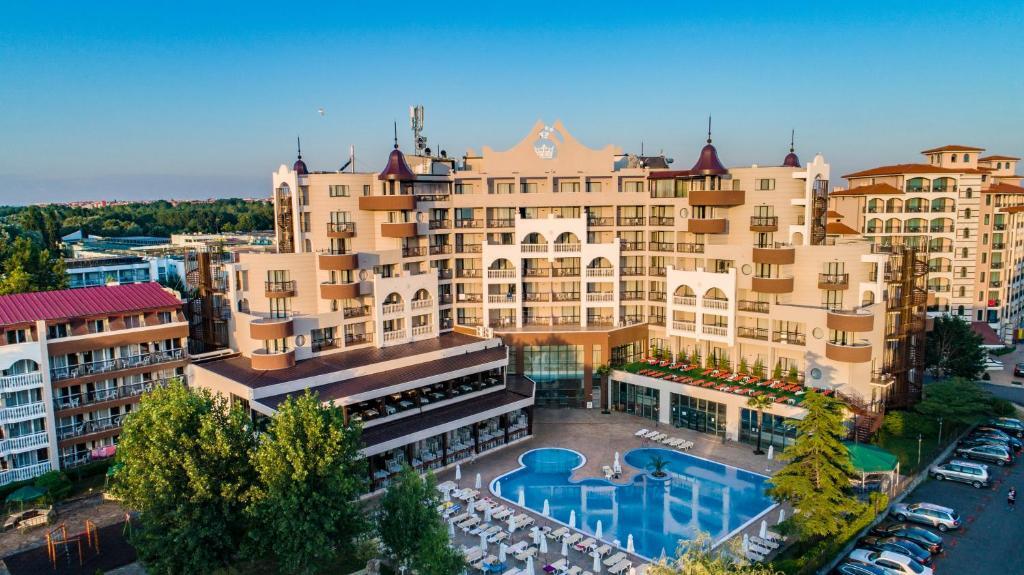
Five hotels, different teams, one business
Hi Hotels Group operates five hotels across two of Bulgaria's best-known holiday destinations: three in Sunny Beach on the Black Sea coast and two in the mountain resort of Borovets.
At the time of the interview, the group had around 800 rooms, accommodating approximately 2,000 guests.
Each hotel has its own management team and handles its everyday operations independently. But the business as a whole is coordinated centrally from the group's office in Sofia.
For Elena Ivanova, Founder and Owner of Hi Hotels Group, that means finding ways to keep five different properties running smoothly while maintaining a clear view of the entire business.
Technology has been part of that work for a long time.
Hi Hotels Group was among the earliest users of Clock in Sunny Beach. By the time of the interview, Elena and her team had been working with Clock products for 25 years.
But the business had changed over those years, and so had the work.
Managing five hotels now meant coordinating different teams, handling reservations from multiple channels, working with tour operators and organising sales and events across properties.
Elena wanted the software to make those responsibilities easier, not simply continue supporting the processes the group had always followed.
A familiar system, but new ways of working
Hi Hotels Group had been using Clock Evolution, the earlier generation of Clock's hotel management software, for many years.
The team knew the system well. Employees had built their routines around it, and it had become a familiar part of how the hotels operated.
Moving to the newer Clock platform offered an opportunity to reconsider some of those routines.
Reservations could arrive with their details already in place. Sales teams could manage contracts, events and discounts more easily. Managers could access the information they needed without depending on a particular workstation.
These were practical changes that could make a difference to people using the system every day.
But introducing them meant asking employees to change habits they had developed over many years.
And not everyone was convinced that the change would make their work easier.
Not everyone was convinced at first
Changing hotel software is rarely just a technical exercise. The people using it have to feel comfortable with the change, especially when guests are arriving and everyday work has to continue.
At Hi Hotels Group, the teams had grown accustomed to Clock Evolution.
Some employees were uncertain about the new system, and there were concerns about whether it would work well in a large hotel.
Stela Stefanova, General Manager of Hotel Imperial in Sunny Beach, remembers those concerns.
She had read comments online suggesting that the newer software might not be suitable for a property of their size.
But the experience turned out differently.
The teams learned the new system as they worked with it. Housekeeping became familiar with its reports, the restaurant team adapted, and reception employees learned to handle their everyday tasks.
Maybe one to two weeks was enough for them to get familiar with the functions of the new system.
According to Stela, the initial uncertainty gradually disappeared as employees became more confident using Clock.
The transition still required an adjustment period, but the concerns about whether the system could support a large hotel proved unnecessary in practice.
Making sales and events easier to manage
For Mina Koleva, Sales Manager at Hi Hotels Group, the change was noticeable in her everyday responsibilities.
Mina has almost 20 years of experience in tourism and has worked with several generations of Clock products.
Her work includes managing events, tour operator contracts and commercial arrangements across the group's hotels.
These are areas where having the right information organised in one system makes a practical difference.
Mina particularly values Clock's Events module.
The Activity calendar brings together events and block management, giving her a clear way to work with group bookings and related arrangements.
Tour operator contracts can also be entered directly into the software, rather than managed through disconnected processes.
That helps keep contractual rates and conditions available where they're needed.
Discounts are another example.
Clock allows the team to configure discounts, including combinations of different offers, while keeping the resulting calculations accurate.
For a hotel group working with different markets, partners and offers, those details matter.
The benefit isn't simply having more options in the software. It's being able to manage complicated commercial arrangements without making everyday work unnecessarily complicated.
Having the information when it's needed
Another important change for Mina was how easily she could keep up with work across the group's properties.
As Sales Manager, she doesn't always need to be physically present at a hotel to answer a question, check a booking or retrieve information.
The biggest benefit for me is that I can work from anywhere in the world as long as I have internet access.
Whether she's away from the office or on holiday, Mina can check an urgent issue, review information or retrieve a report.
For her, that's useful because the work doesn't always happen in one place.
Sales responsibilities involve different properties, partners and requests, and having the information available when it's needed makes it easier to deal with them.
It's a practical convenience rather than a change in the purpose of her job.
But it removes one more obstacle from managing responsibilities across five hotels.
Reservations that no longer need the same manual work
The change was also visible in the reservations department.
Deana Ristina works as a Reservation and Invoicing Specialist for individual guests at Hi Hotels Group.
Her everyday responsibilities include reservations, confirmations, invoicing and making sure that booking information is accurate.
During the integration with the group's channel manager, there was an issue with importing reservations. With help from Clock's customer team, the problem was resolved.
Once the integration was working as intended, reservations could flow into Clock automatically.
Now online reservations come in automatically, including the notes attached to them, which is a big advantage.
Having guest notes included with reservations means the team receives information that might otherwise need to be checked or entered separately.
Deana also points to how manually agreed prices are handled.
When a reservation has a manual price, it comes through correctly, without discrepancies in the rates.
For someone responsible for reservations and invoicing, these are important improvements.
They reduce the need to double-check information, correct differences or spend time on repetitive administration.
And they help the reservations team concentrate on handling bookings rather than fixing avoidable problems.
One system, different responsibilities
What makes the change interesting is that different people at Hi Hotels Group value different things about Clock.
For Elena, the priority was making sure the system could continue supporting a business that had grown and changed over 25 years.
For Mina, it was having the tools and information to manage sales, events and commercial arrangements across the group.
For Deana, it was more reliable reservation information and fewer manual steps.
And for Stela, the important part was seeing employees become comfortable with a system they had initially been unsure about.
These aren't separate stories about unrelated features.
They're different parts of the same business.
A hotel group with five properties needs people in different roles to work with accurate information, even when their responsibilities are very different.
Clock gives those teams a common place to manage their work while allowing each hotel to continue handling its own day-to-day operations.
Building on 25 years of experience
Hi Hotels Group didn't choose Clock because it was unfamiliar with the software.
Quite the opposite.
After 25 years of working with Clock products, Elena knew the company and had seen its technology develop through different generations.
Moving to the newer platform was a significant change, especially for employees who were comfortable with the previous system.
But after a year of using it, Elena was satisfied that the group had taken the right direction.
I was strongly convinced this was the right path, and after one year of using the cloud version of Clock, I believe we made the right decision.
The move didn't mean everything changed overnight.
Teams had to learn new ways of working, and some initial concerns needed to be overcome.
But the practical improvements became clear in the work itself.
Sales and events were easier to organise. Reservation information arrived more reliably. Employees could learn the system and use it confidently.
For Hi Hotels Group, the important part wasn't moving from one generation of software to another.
It was making everyday work easier for the different people responsible for keeping five hotels running.
Think Clock might fit your hotel?
Explore how Clock can help your team, your guests and your growth.