
How Elegancia brought its hotels together with Clock
Marine Bossanne shares how Elegancia introduced common processes across its hotels, made staff training easier and improved the way teams share guest information.
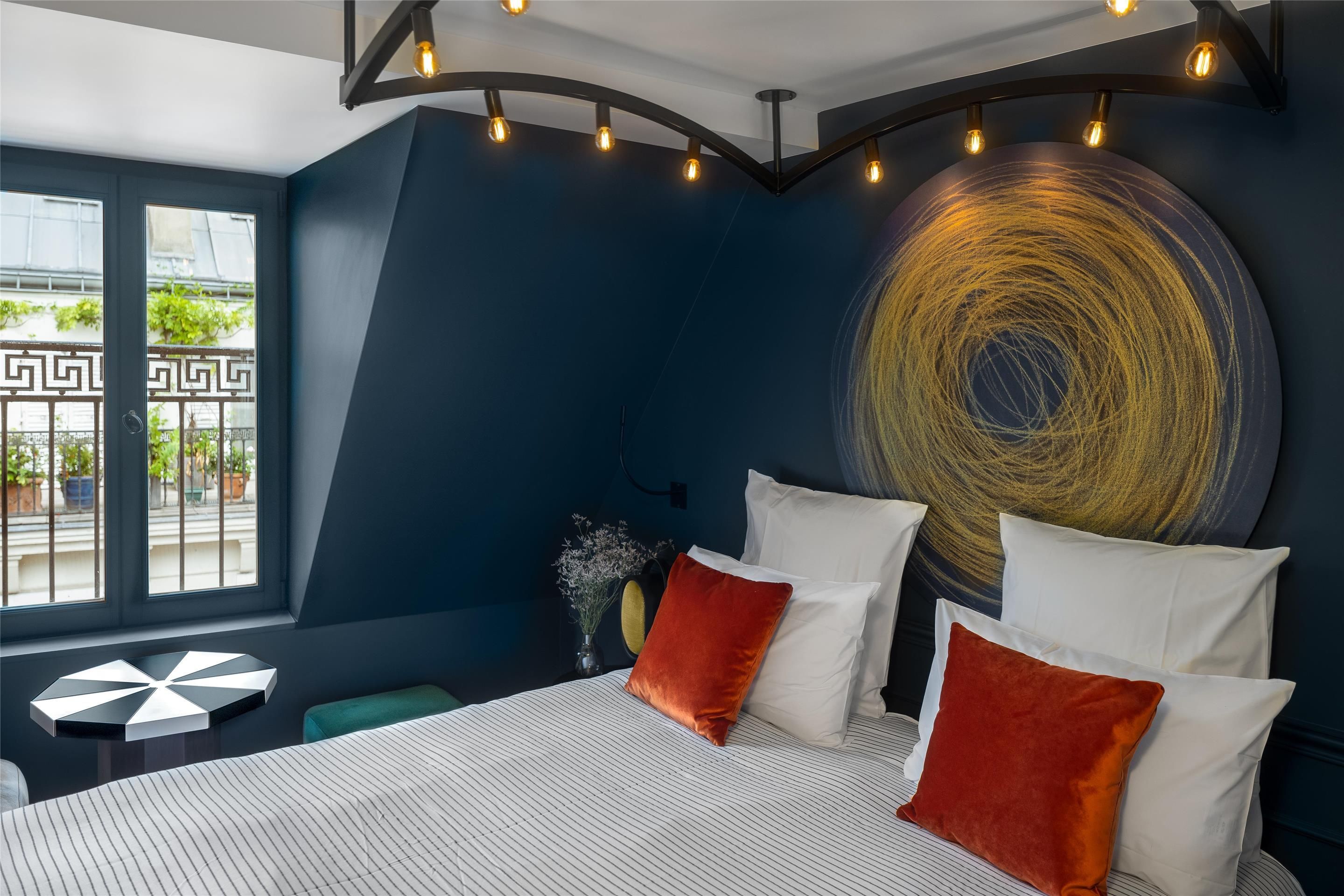
Different hotels, one growing group
Elegancia runs a collection of hotels in Paris, each with its own character and guest experience.
The group's hospitality business extends beyond accommodation to restaurants, bars, wellness, events and private gatherings.
At the time of the interview, Elegancia managed 18 hotels and marketed four more, with a team of around 250 people.
For Marine Bossanne, Project Manager Operations and Quality, the challenge was to make the group easier to manage without treating every hotel as though it were the same.
Each property needed to keep its own identity. But the people running the group also needed a clear view of what was happening across the business.
That wasn't something they could achieve easily with separate systems and different processes at every hotel.
Elegancia needed a common way of working that could support the entire collection.
Seeing the whole business, not just individual hotels
When Elegancia started looking for a new property management system, multi-property management was at the top of its requirements.
The group needed to do more than manage reservations and day-to-day hotel operations.
It wanted to understand how its different properties were performing and compare them with one another.
For Marine and the management team, that meant having reliable financial and operational information organised consistently across the group.
Without a common system, comparing hotels meant working across different tools and different ways of recording information.
Clock offered a way to manage the hotels through a shared platform while retaining the flexibility to work with existing technology.
The group wasn't looking to replace every tool it already used. It wanted its hotels to be easier to manage together.
That would make reporting, comparisons and everyday decisions more straightforward.
Changing the system across 20 hotels
Moving one hotel to a new PMS takes preparation. Moving an entire collection is a different kind of project.
Elegancia decided not to change every property at once.
Instead, the group introduced Clock in two phases, starting with ten hotels and following with another ten.
The implementation took place over roughly a year, with a pause between the two phases for adjustments and circumstances related to the Covid period.
For Marine, the phased approach was an important part of making the change manageable.
Doing it in two steps, ten hotels at a time, allowed us to properly support and train the teams.
It gave the group time to work closely with each hotel, help employees learn the new system and respond to questions as they came up.
There was some hesitation at first, as there often is when people have to change a tool they use every day.
But the training and support provided by Elegancia's internal teams and Clock helped employees become comfortable with the new system.
For Marine, the lesson was clear: changing the software across a hotel group didn't have to mean changing everything at once.
Taking the time to support people made the transition easier to manage.
Making it easier for people to move between hotels
Once Clock was in place, Elegancia could begin making its everyday hotel processes more consistent.
Instead of employees learning different systems and ways of working depending on the property, the group could give them a common set of tools.
That made training simpler. It also made it easier for people to move between hotels.
It makes internal mobility easier, because staff already trained on the tool find the same interfaces when they move to another hotel.
Elegancia also began organising shared training sessions, bringing employees from different properties together.
These sessions helped people learn the same system while getting to know colleagues from other hotels.
For a group with multiple properties, that makes a practical difference.
Employees can share knowledge, support one another and take on responsibilities at another location without starting their training from scratch.
And the group can maintain consistent processes without having to manage every hotel as a completely separate operation.
Knowing the guest, whichever hotel they choose
The benefits of a shared system weren't limited to the people working behind the scenes.
Marine also wanted to improve the experience of guests who stayed at different Elegancia properties.
Although each hotel offers something different, guests shouldn't have to start from scratch every time they visit another property in the collection.
With Clock, Elegancia can share guest profiles across its hotels.
That means information about a returning guest can be available to the team at another property.
Marine gives a simple example: a guest who likes their eggs prepared in a particular way at breakfast.
If that preference is recorded in their guest profile, another Elegancia hotel can use the information to make the next stay feel more personal.
It's a small detail, but that's exactly the point.
Good hospitality often comes from remembering things that matter to individual guests.
A shared system helps the team carry that knowledge from one hotel to another.
Giving guests more choice before they arrive
Elegancia also wanted to make more of the guest journey available online.
Not every guest wants to handle their stay in the same way. Some are happy to spend time at reception. Others, particularly business travellers, prefer to complete the formalities quickly and get on with their day.
Clock's guest tools gave Elegancia more flexibility in how these interactions could happen.
The group uses the self-service portal to collect guarantee deposits and secure reservations before arrival.
Online check-in allows guests to complete part of the arrival process in advance, rather than having to do everything at the front desk.
For guests who want a quicker arrival, that's a useful option.
For reception teams, it means fewer routine tasks to handle when guests walk through the door.
And because the hotels use the same system, Elegancia can offer a more consistent experience across the collection, even though the properties themselves remain different.
Working together without becoming the same
For Marine, the value of Clock comes from what it makes possible across the whole group.
Managers can compare performance using more consistent information. Staff can move between hotels without having to learn a different system. Teams can share knowledge about returning guests.
Those changes bring the properties closer together operationally.
But they don't require Elegancia's hotels to become identical.
Each can keep its own style, atmosphere and way of welcoming guests.
And the people managing the group can spend less time dealing with differences in everyday processes and more time helping the hotels work well.
The aim wasn't to make every hotel operate as though it were the same property. It was to make being part of a group useful to the people working in each one.
Think Clock might fit your hotel?
Explore how Clock can help your team, your guests and your growth.