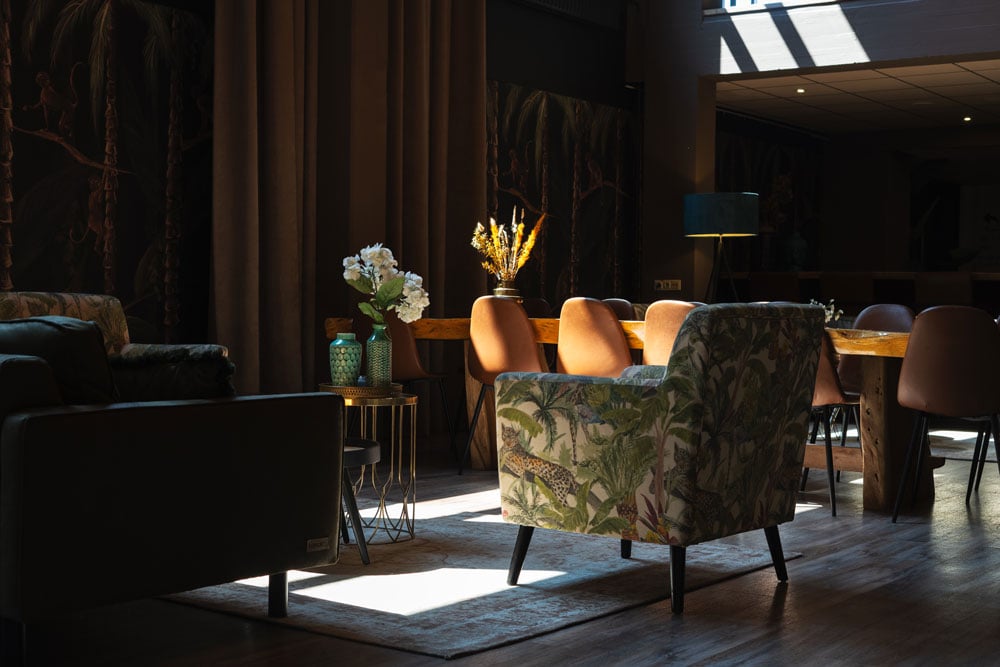
How Hotel Wander brought its hotel operations together with Clock
Steff de Groot explains how Hotel Wander brought rooms, events and everyday operations together, reduced routine front desk work and gave guests more choice.
A hotel that couldn't afford to stop
Hotel Wander, formerly WICC Hotel & Congress Centre, is no ordinary hotel.
With 208 rooms, 26 meeting spaces, a restaurant and a bar, there's a lot happening under one roof. Conferences need organising, guests need checking in, rooms need managing and different departments need to work together.
For Steff de Groot, Owner & General Manager, that makes reliable hotel software essential.
Unfortunately, the hotel's previous property management system wasn't keeping up.
Reporting was limited, accounting was difficult to manage, and sometimes the system would stop working for hours without anyone knowing why.
For a business with so many moving parts, those interruptions were more than an inconvenience.
Steff needed something the team could depend on, without making an already complicated operation harder to manage.
One system, not a collection of pieces
When Steff began looking for a replacement, he had one important requirement: the new PMS needed to support the whole operation, including meetings and events.
He didn't want to assemble a system from several different suppliers and then spend his time dealing with the connections between them.
Each additional piece meant another dependency, another point of failure and another company to call when something went wrong.
Steff preferred a different approach. One core system, with the main parts of the business working together.
So if you choose one integrated software management system, you have one person to talk to. And they are responsible for the total functionality of your system.
It wasn't about getting as many features as possible. It was about having fewer things to coordinate and fewer places where problems could arise.
Finding a system that fitted the hotel
Steff looked at different property management systems before choosing Clock.
What stood out was how much of the hotel's operation could be managed within the same platform.
Rooms, meetings and events, restaurant operations and the bar could all be supported through connected tools.
At the same time, Clock offered flexibility. The hotel could use its built-in functionality where it made sense and connect other software where a different solution was preferred.
That meant Steff didn't have to choose between running an integrated operation and retaining control over how the hotel worked.
And because the system would be used every day, the people supporting it mattered just as much as the functionality.
For Steff, choosing the right PMS meant choosing something that would make running the hotel less complicated, not simply replacing one piece of software with another.
Letting guests do things their own way
Steff also wanted to rethink how guests interacted with the hotel.
Not every guest wants the same experience. Some prefer to speak with someone at reception. Others would rather take care of things themselves, before they arrive.
Steff believed guests should have that choice.
With Clock's online self-service tools, guests could handle more of their stay digitally. The hotel's booking and enquiry tools also helped move work away from the front desk.
Instead of having staff handle every routine request, the hotel could let guests complete more of these steps themselves.
That didn't mean taking people out of hospitality. It meant giving employees more time for guests who actually needed their attention.
The idea was to make personal service a choice, not a requirement for every small task.
A different way to run the front desk
The changes became visible in how the front desk was organised.
For example, before we started with Clock, I think we had 30 to 40% more employees at the front desk than we have now.
That change wasn't simply about replacing people with software.
The hotel had encouraged guests to use online self-service and made more of its everyday processes available digitally. Work that once depended on reception could now be handled in other ways.
According to Steff, this helped the hotel operate with a smaller front desk team.
It also changed what employees could spend their time doing.
Instead of processing every routine interaction, the team had more room to help guests, answer questions and deal with situations that actually needed a person.
Making room for better hospitality
Steff sees good technology as a way to keep improving the hotel, not as an end in itself.
The fewer obstacles there are behind the scenes, the more attention the team can give to the experience in front of the guest.
That matters because hospitality is about more than completing a reservation or checking someone into a room.
It's about how people feel during their stay, whether they want to return and whether they would recommend the hotel to someone else.
For Hotel Wander, Clock became part of a simpler way to run a complex business.
Different departments could work together, guests had more ways to manage their stay and reception no longer had to handle every routine interaction.
The result wasn't just a different system. It was a different way to organise the work, with more attention available for the people staying at the hotel.
Think Clock might fit your hotel?
Explore how Clock can help your team, your guests and your growth.
“Easy to use”
“Fast, intuitive, and reliable”
“Saves a lot of time”
“New staff learn it quickly”
“Accessible from any device”
“Less manual work”
“Fewer booking mistakes”
“Responsive and helpful support”
“Easy to use”
“Fast, intuitive, and reliable”
“Saves a lot of time”
“New staff learn it quickly”
“Accessible from any device”
“Less manual work”
“Fewer booking mistakes”
“Responsive and helpful support”