
How YellowSquare made technology work around its guests with Clock
Marco Coppola explains how YellowSquare found a more flexible way to run its hostels, connect the tools it needs and make more time for guests.
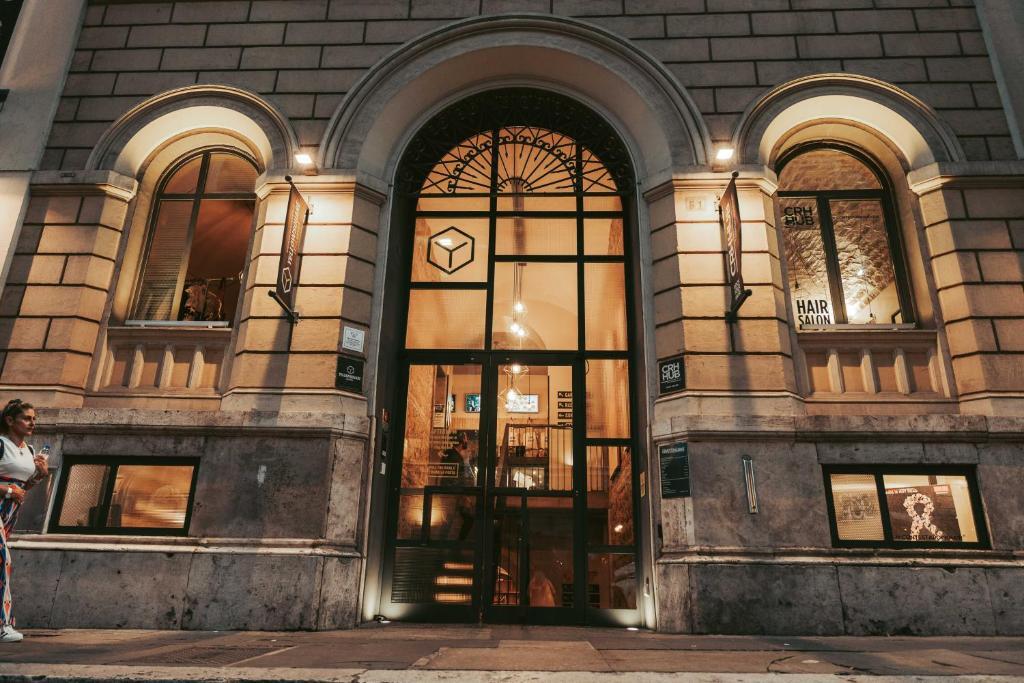
From three rooms to a different kind of hostel
YellowSquare started with a small bed and breakfast in Rome, with just three rooms and an idea of what hospitality could become.
Over the following two decades, the business grew into something quite different. By the time of Marco Coppola's interview, it had reached 90 rooms and 350 beds.
But YellowSquare was never interested in being just another place to sleep.
The idea was to create somewhere travellers could meet people, take part in activities and experience the city around them. Accommodation was part of it, but so were the shared spaces and the connections people made during their stay.
For Marco, Owner & Chief Navigator Officer, technology had an important role to play in making that possible.
YellowSquare's guests were increasingly millennials and Generation Z travellers. They were comfortable with mobile technology and expected services to be accessible, quick and easy to use.
But the hostel's approach to hospitality also meant its needs didn't always fit neatly into the way conventional hotel systems worked.
YellowSquare needed technology that could support its own way of doing things, not dictate how the business should operate.
Outgrowing the old way of working
Before Clock, YellowSquare relied on a traditional property management system.
It worked, but it came with responsibilities the team didn't want to spend so much time on.
The system depended on older technology and required considerable internal resources to maintain.
For Marco, who wanted to keep developing the business and experimenting with new ideas, that wasn't an ideal use of the team's time.
He wanted the system behind the hostel to be something people could depend on without having to look after every part of it themselves.
Moving to a system maintained and updated by the software provider was one reason Clock appealed to him.
But it wasn't the only one.
More importantly, Marco wanted a system that wouldn't limit what YellowSquare could do next.
Getting started without the usual complications
Moving to a new property management system can be a difficult process, particularly when employees depend on it for everyday operations.
But Marco describes YellowSquare's move to Clock as straightforward.
The technical setup required less work than the previous system, and the team received hands-on support during the transition.
Marco remembers someone from Clock spending a week on site during implementation, working alongside the staff and helping them learn the system.
Whenever the team had a question or needed to do something unfamiliar, they could ask for help and get a practical answer.
That combination mattered: a system that was relatively simple to introduce, and people available to help when something needed explaining.
The goal was to get the team comfortable with its new tools without turning the change itself into a major technical project.
The freedom to build and connect
For Marco, the most important feature of Clock wasn't a particular screen or everyday operation.
It was the open API.
YellowSquare operates in a way that doesn't always fit neatly into a conventional hotel setup. And working in Italy brings its own fiscal and legislative requirements.
Marco didn't want those differences to dictate which tools the business could use.
Clock's open API gave YellowSquare the flexibility to connect other applications and adapt the system to its own needs.
The most important thing, the feature, which particularly captured me was the open API.
For Marco, the simplicity of the API was just as important as its availability.
It meant the group could connect the systems it needed instead of being restricted to a fixed collection of tools.
That's an important distinction for a business that wants to experiment.
New ideas don't always fit the way a standard hotel operates. And Marco didn't want every new idea to begin with the question of whether the PMS would allow it.
Rather than making YellowSquare fit the software, Clock gave the business more freedom to choose how it wanted to work.
A system that can change with the business
YellowSquare wasn't only looking for software that worked on the day it was installed.
Marco wanted something that would continue developing as the business changed.
He appreciated that Clock released updates regularly and was open to suggestions from its customers.
One aspect that stood out was the possibility for customers to propose improvements and vote on the changes they wanted to see.
For YellowSquare, that meant having a way to contribute ideas instead of simply waiting to see what the software provider decided to build.
It didn't mean every request would automatically become a new feature.
But it gave customers a voice in how the product developed.
For Marco, that was another reason Clock felt like a good fit: YellowSquare's requirements wouldn't stay the same forever, and it needed a system that could continue improving alongside the business.
Making room for the human side of hospitality
For all his interest in technology, Marco doesn't see automation as the purpose of hospitality.
He sees it as a way to make hospitality better.
Routine processes take time. Every administrative task that can be handled more simply gives employees an opportunity to focus on something else.
And at YellowSquare, that something else is the guest experience.
The technology is fundamental to simplify the routine processes and give more time to our staff to work on the customer experience.
Marco points to tools such as online check-in and the automated guest portal as examples of how Clock supports this approach.
Guests have more ways to handle routine parts of their stay themselves, while employees can spend more time on personal interactions.
That's particularly relevant to YellowSquare, where meeting people and taking part in the life of the hostel are central to the experience.
The aim isn't to remove people from the guest journey.
It's to stop occupying them with work that doesn't need their attention.
Technology that follows the business, not the other way around
YellowSquare has grown by doing things differently.
From a small bed and breakfast in Rome, it developed a concept built around shared experiences, social spaces and the people staying there.
That kind of business needs room to experiment.
For Marco, choosing Clock meant finding a system that could handle everyday hotel operations without closing off other possibilities.
The open API allows YellowSquare to connect the tools it needs. Ongoing product development gives it a way to keep improving its processes. Simpler routine work gives employees more time to spend with guests.
These aren't separate technology goals. They all support the same idea.
YellowSquare wants to decide what kind of hospitality it offers. The software should help make that possible, not decide for it.
Think Clock might fit your hotel?
Explore how Clock can help your team, your guests and your growth.