
The challenge of pricing without a revenue manager In the first article, we looked at revenue management habits that small hotels can adopt without a dedicated revenue manager. But let’s be honest: pricing is still the trickiest part.

The challenge of pricing without a revenue manager
In the first article, we looked at revenue management habits that small hotels can adopt without a dedicated revenue manager. But let’s be honest: pricing is still the trickiest part.
Set your rates too high, and bookings slow down. Set them too low, and you lose valuable revenue. Add seasonal patterns, local events, or sudden disruptions, and it can feel like an impossible balancing act.
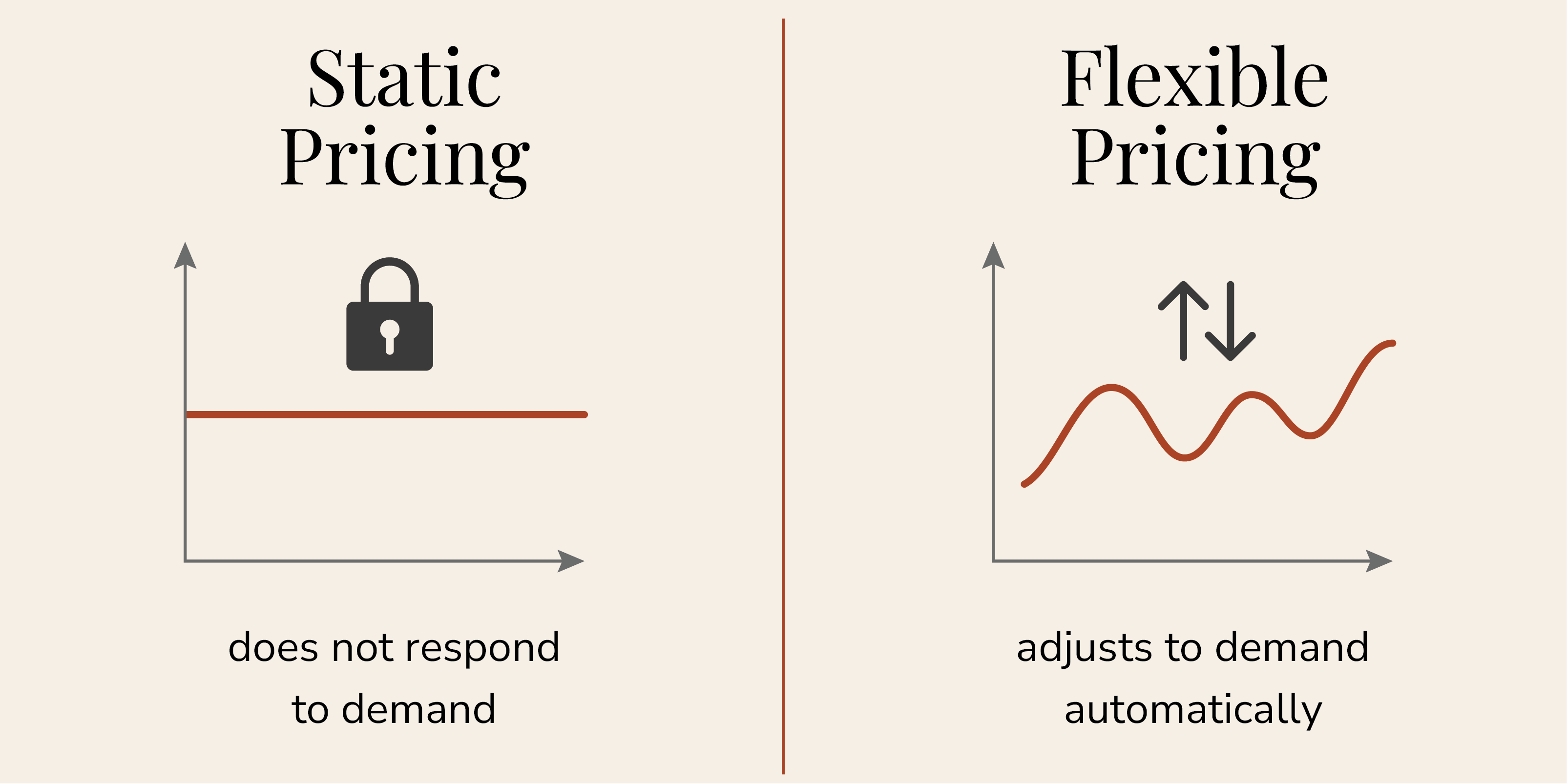
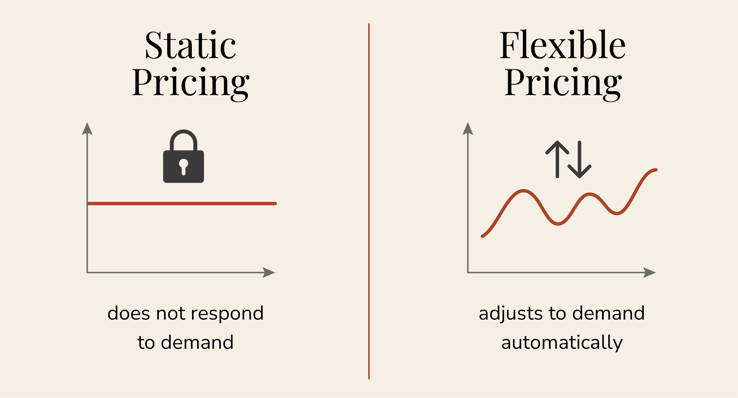
This is why so many small hotels leave money on the table. Static, outdated pricing just can’t keep up with today’s unpredictable market. The good news? Flexible rate structures do the heavy lifting, keeping you competitive and profitable without endless manual updates.
Why flexible rate plans matter
Revenue management isn’t just about setting the “right price.” It’s about matching your prices to demand, guest behaviour, and market conditions in real time. Flexible rate plans give you the tools to do exactly that.
Imagine this: your hotel is near an airport. Suddenly, bad weather grounds flights, and demand for rooms skyrockets. If you rely on static rates, you risk selling out too cheaply. But with occupancy-based pricing, your rates rise automatically as rooms fill, protecting your revenue while keeping prices fair and transparent for guests.
Flexible rate plans aren’t about complicating things, they’re about keeping you in control, even when the market shifts overnight.
How Clock Property Management System+ enhances rate management
Clock PMS makes it simple to create flexible rate plans that align with your business goals. Here are some of the key features that small hotels find most useful:
1. Single and derived rates
Start with a base rate for your standard room. Create derived rate plans like, Advance Purchase, Semi-Flex, or seasonal offers, by applying a simple percentage or fixed-amount adjustment. Mirror the same setup across room categories, so deluxe rooms and suites automatically follow the base rate with their own offsets. As demand shifts, tweak those differentials: keep the gaps small in quieter periods to encourage upgrades, and increase them when business is strong. One update to the base rate and every linked rate plan and room type moves with it, giving you clean, consistent pricing with far less effort.
2. Guest-based rates
Tailor rates based on room occupancy and guest composition. For example:
- Adults are charged a standard rate.
- Children aged 0–3 stay free.
- Children aged 4–12 are charged a reduced rate.
This level of customisation ensures families and groups feel valued while maintaining pricing transparency.
If your property attracts many families, you may want to introduce different price levels for children of various ages to maximise revenue. During need periods, you could also create family-friendly packages with a slightly lower overall price, making your offer more appealing while filling rooms that might otherwise stay empty. In contrast, if you run a business-focused hotel, it often pays to keep things simple, with clear per-room or per-guest pricing, so your rates remain easy to understand and quick to book.
3. Occupancy-based rates
Occupancy-based rates are a game-changer for handling demand changes fast and without manual intervention. Take the example of an airport property during a weather disruption. As flights are cancelled and rooms fill, Clock PMS automatically adjusts your rates to reflect rising demand. It can even apply restrictions, such as stopping lower-margin booking channels for sale, so you prioritise direct bookings and maximise profitability, without any manual effort.
4. Hurdle rates
Hurdle rates protect your bottom line by setting minimum thresholds. No matter what happens, your rooms never drop below a level that jeopardises profitability.
For example, imagine you accidentally type €10 instead of €100 for a nightly rate. With a hurdle rate in place, the system won’t allow the price to fall below your set minimum, so you avoid selling rooms at a loss. Another scenario is when you create an offset offer, such as a discount linked to a base rate. On certain dates, that discount might push the price below what you’re comfortable accepting. A hurdle rate ensures your minimum price is always protected, keeping your revenue safe even when rates shift dynamically.
5. Rate packages
Combine room bookings with additional services to create compelling offers. For example, a “Weekend Package” might include breakfast and access to local attractions, boosting both guest satisfaction and revenue per booking.
Package rates also allow you to target different audiences and balance demand. A mid-week package could attract leisure guests during quieter times, while other bundles highlight your property’s outlets, such as restaurants, bars, or wellness facilities. This way, packages not only help you fill rooms in need periods but also encourage guests to explore more of what your hotel has to offer.
6. Corporate, travel agent, and tour operator rates
Easily manage negotiated rates for business partners, ensuring smooth collaborations with corporate clients, travel agents, and tour operators while maintaining profitability.
Corporate guests can book directly with their contracted rates and conditions by using a dedicated corporate booking code, making the process quick and straightforward. For hotels working with tour operators, all relevant information, including allotments and agreed terms, is stored in the PMS. This means your staff can access everything they need at a glance and create bookings in no time, without the risk of miscommunication or manual errors.
7. Seasonal and restriction-based rates
Apply seasonal pricing or tailor rates to specific time periods. For example, increase rates during high-demand periods like holidays, music events, or fair seasons, or set minimum stay restrictions, different cancellation, or payment conditions to maximise revenue.
Seasonal and restriction-based rates are also a great way to stimulate demand in quieter months. You might create a “Spring Escape” offer with attractive conditions to fill rooms during the shoulder season. At the same time, restrictions can protect your business during peak times. For example, setting a minimum two-night stay over New Year ensures you don’t lose revenue to single-night bookings that block availability. These strategies give you flexibility to balance occupancy and profitability throughout the year.
Advanced revenue strategies with RMS integration
While Clock PMS excels at managing flexible rate plans and occupancy-based pricing, some scenarios require more advanced revenue strategies. For example, if a major music or sports event is announced at short notice in your area, pricing adjustments should reflect the increased demand.
Here, you have two options:
- Manual Adjustments: Hoteliers can proactively update rates and restrictions in Clock PMS based on expected demand changes.
- RMS Integration: For full automation, Clock Property Management System+ integrates seamlessly with leading revenue management systems. An RMS can dynamically adjust rates and restrictions in real-time based on market trends, competitor pricing, and demand forecasts
Ease of use: Simplifying revenue management
Clock Property Management System+ is designed to make rate management accessible to all types of properties. Its intuitive interface allows you to set up, adjust, and monitor rate plans without specialised expertise. Even small properties can compete with larger chains by implementing flexible pricing strategies quickly and efficiently.
The broader benefits of flexible rate structures
By adopting flexible rate structures, your property can achieve more than just increased revenue. Here’s how it helps:
- Stay Competitive: Adapt quickly to changes in demand, ensuring your property remains a preferred choice for guests.
- Enhance Guest Satisfaction: Flexible pricing offers guests more options, such as early booking discounts, off-peak rates, or tailored packages that meet their preferences.
- Streamline operations: Automation reduces manual work, freeing your team to focus on hospitality instead of spreadsheets.
Take control of your pricing strategy
In our first blog, we covered simple habits any hotel can adopt, such as monitoring pickup and analysing cancellations. Now, flexible rate structures take those insights further, turning them into real-time pricing strategies.
For small hotels, this is a game changer. It lets you protect margins, adapt to sudden demand shifts, and compete with confidence - without needing a full revenue management department.
Take the next step in your revenue journey. Discover how flexible rate structures in Clock’s Property Management System+ can help you stay in control of your pricing, no matter what the market throws at you.