
How Hôtel Balmoral increased revenue by 15% in its first year with Clock
Two family-run hotels, one focus on revenue
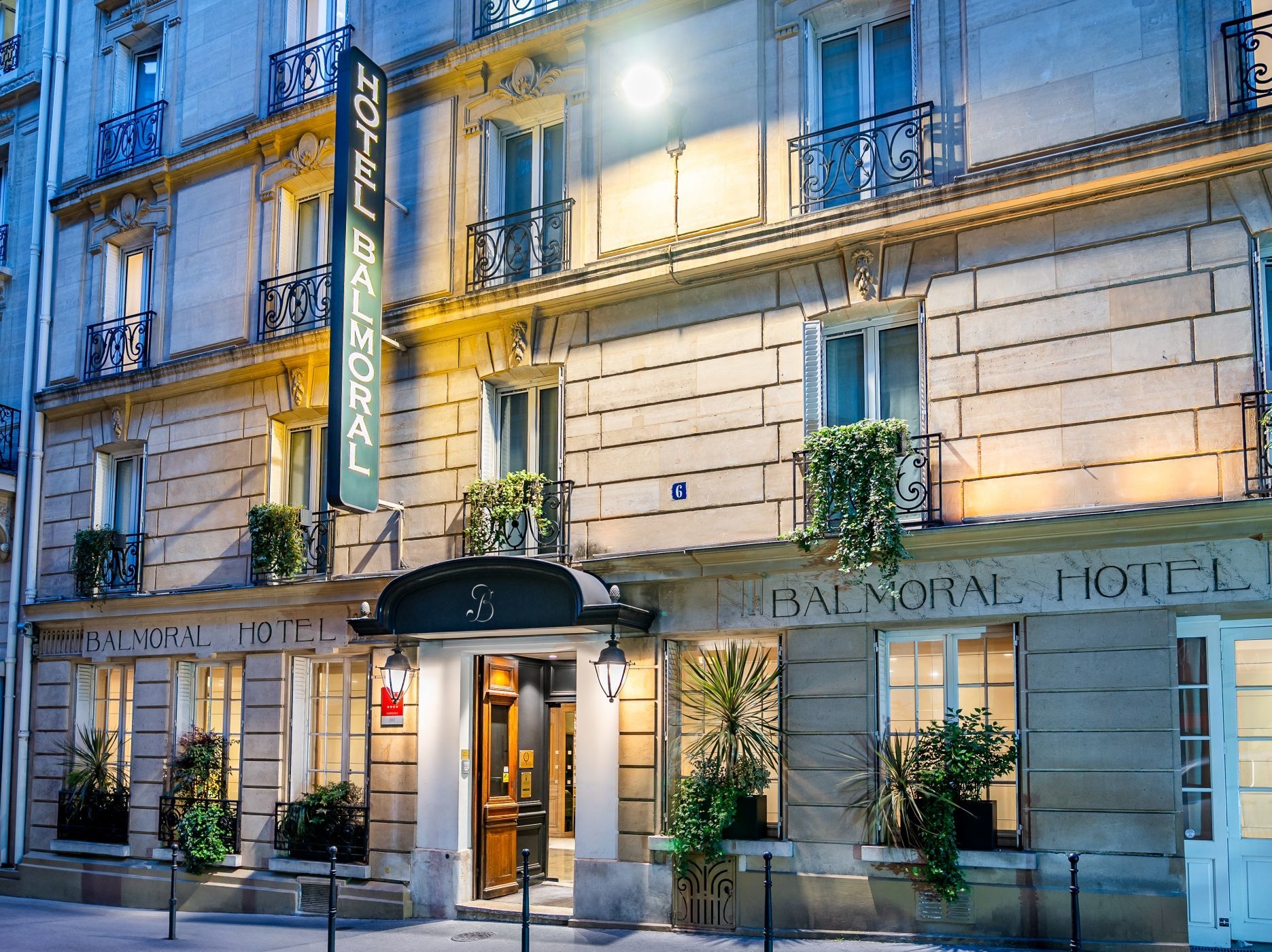
Hôtel Balmoral is a four-star boutique hotel in Paris, near the Champs-Élysées and the Arc de Triomphe. Along with Hôtel Mademoiselle, near Gare du Nord and Gare de l'Est, it belongs to the Dapremont family.
Both hotels are independently run, with their own character and guests. But they share the same need to manage reservations, pricing and revenue carefully.
That's part of Antoine Bélorgey's job as Operations and Revenue Manager for both properties.
His responsibilities go beyond keeping the hotels running smoothly. He also needs to make sure they're making the most of their rooms, maintaining a healthy share of direct bookings and responding to changes in demand.
For Antoine, the right property management system has an important role in all of that.
But the previous setup wasn't making his job particularly easy.
Too many systems for everyday decisions
Before Clock, the hotels relied on an older PMS with very few integrations.
Managing rates, availability and restrictions meant moving between different platforms, including the PMS, channel managers and OTA extranets.
Information was spread across different tools, and tasks that should have been straightforward required more manual work than necessary.
That was frustrating for the reception team, but it also affected how easily Antoine could manage the commercial side of the business.
Every change to a rate or restriction meant making sure the right information was available in the right place.
The hotels needed a more practical way to handle those responsibilities.
For Antoine, the goal of switching to Clock was straightforward: automate repetitive processes, bring important information together and make the system easier for employees to use.
But he also wanted to make sure the change would support the hotels' revenue strategy.
Keeping control of rates and distribution
One of the things Antoine values most about Clock is its built-in rate plan management.
Previously, managing prices and restrictions meant working across several different platforms.
With Clock, the hotels could manage more of those activities from one place.
That made it easier to organise rates, work with booking conditions and maintain a clearer view of the information needed for daily pricing decisions.
For a revenue manager, that matters.
Prices and restrictions need to respond to demand, and having to move between systems adds unnecessary work to decisions that already require attention.
Clock didn't remove the need to make those decisions. It made the work involved in carrying them out more manageable.
And that gave Antoine a better foundation for managing revenue across both hotels.
Protecting a strong share of direct bookings
Increasing revenue wasn't the only priority.
Antoine was also determined to protect something the hotels had already worked hard to build: their direct booking business.
Before the move to Clock, bookings made through the hotels' website, by phone and by email accounted for approximately 50% of revenue.
Maintaining that share was one of Antoine's key objectives when changing systems.
He didn't want the hotels to become more dependent on third-party booking channels as they introduced new technology.
Quite the opposite. The goal was to make it easier for guests to book directly while keeping the hotel's distribution manageable.
According to Antoine, the hotels went on to exceed the 50% mark for direct bookings.
That's an important distinction in the story.
The aim wasn't simply to attract more reservations from every available source. It was to grow the business while maintaining control over how those reservations were generated.
15% revenue growth in the first year
For Antoine, the commercial results were encouraging.
During the first year of using Clock, he reports that the hotels increased their revenue by 15%.
“Beyond that, in terms of revenue, during our first year using Clock, we increased our revenue by 15%.”
The positive results continued.
Looking back over the 12 months preceding the interview, Antoine explains that the business achieved record monthly revenue in seven of those months.
These are significant results for the hotels, although revenue performance naturally depends on more than a property management system alone.
What Clock provided was a more manageable way to handle the work behind the commercial strategy: rates, restrictions, reservations and the information the team needed every day.
For Antoine, those improvements helped support the way the hotels managed their business while pursuing stronger revenue performance.
Less administration at the front desk
The changes weren't limited to pricing and revenue management.
The previous system had also made routine reception work unnecessarily time-consuming.
Tasks such as sending booking requests, handling check-ins and check-outs, and preparing invoices required considerable manual effort.
With Clock, more of these processes could be handled automatically or completed with fewer steps.
Payment handling was another important improvement.
The hotels introduced automated payments through Adyen, reducing the need for employees to handle payment operations manually.
For Antoine, this was important for both efficiency and security. Payments could be processed through an integrated system with 3D Secure authentication, helping protect sensitive customer information.
The result was less repetitive work for employees and fewer administrative tasks competing for their attention.
That made a difference at reception, where every minute spent on paperwork is a minute that can't be spent helping a guest.
Giving guests more control over their stay
Antoine also wanted to make the experience easier for guests.
Clock's self-service guest portal became an important part of that approach.
Guests can share their expected arrival and departure times, modify reservations and provide a credit card guarantee without having to call or visit reception.
They also have a direct way to communicate with the hotel.
For guests, that means being able to handle more of the practical details of their stay when it suits them.
For employees, it means fewer routine requests and more time to deal with the questions that actually need personal attention.
Antoine sees that as an improvement to both the guest experience and the way the team works.
It also supports the hotels' focus on direct relationships with their guests, rather than making every interaction dependent on an intermediary.
Better tools for the people running the hotels
Changing a PMS affects the whole team, not just the person responsible for selecting it.
For Antoine, it was important that employees could become comfortable with Clock without a long and complicated learning process.
He describes the system as intuitive, with staff able to understand how to perform their everyday tasks from the beginning.
And when questions came up, the Clock team was available to provide support.
That combination helped the hotels introduce new processes without making everyday work unnecessarily difficult.
It also meant that the benefits weren't limited to management.
Reception employees could complete routine tasks more easily, while Antoine had a more practical way to manage rates, revenue and distribution.
Different responsibilities, but the same goal: making the work behind the hotels easier to organise.
Growing revenue without adding complexity
For Hôtel Balmoral and Hôtel Mademoiselle, the move to Clock was about more than changing the software used to manage reservations.
Antoine wanted better control over rates and distribution, fewer manual tasks and a way to maintain the strong direct booking business the hotels had already built.
The results he shares are encouraging: 15% revenue growth during the first year with Clock, record monthly revenue in seven of the following 12 months reported in the interview, and direct bookings exceeding the 50% mark.
Those numbers tell an important part of the story.
But so does the work behind them.
Rates became easier to manage. Payments and routine processes required less manual attention. Guests gained more control over their reservations, and employees had more time to look after them.
For Antoine, Clock became part of a more effective way to manage two independently run hotels.
The aim wasn't simply to do more business. It was to manage that business better, without making the everyday work more complicated.